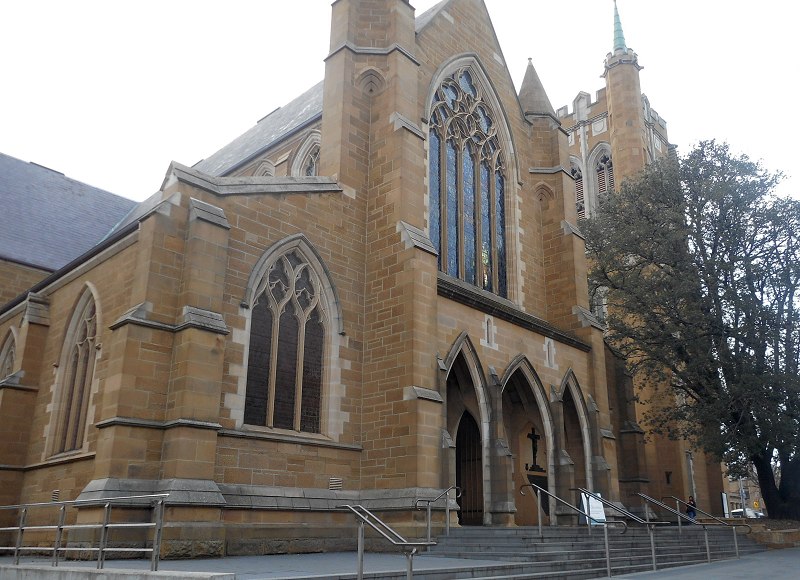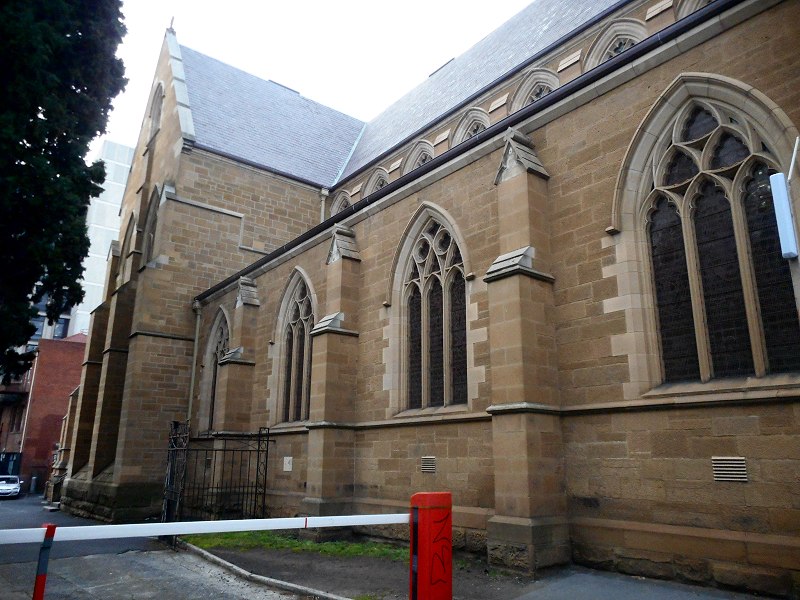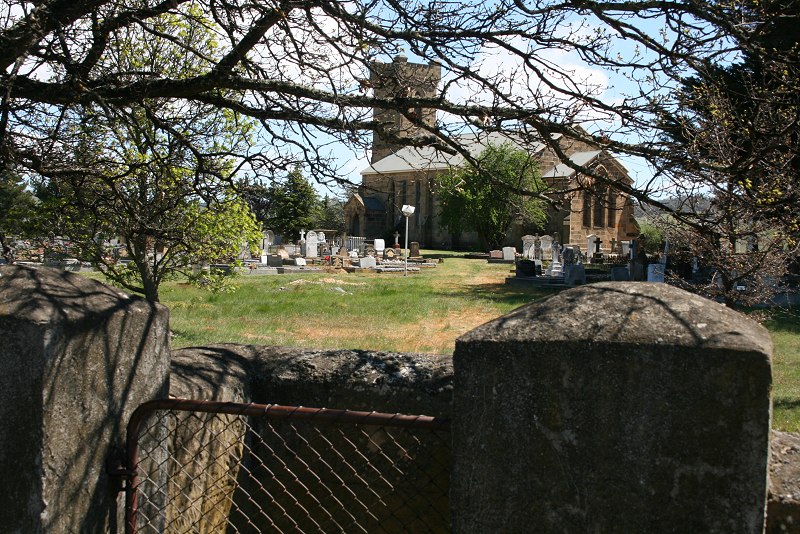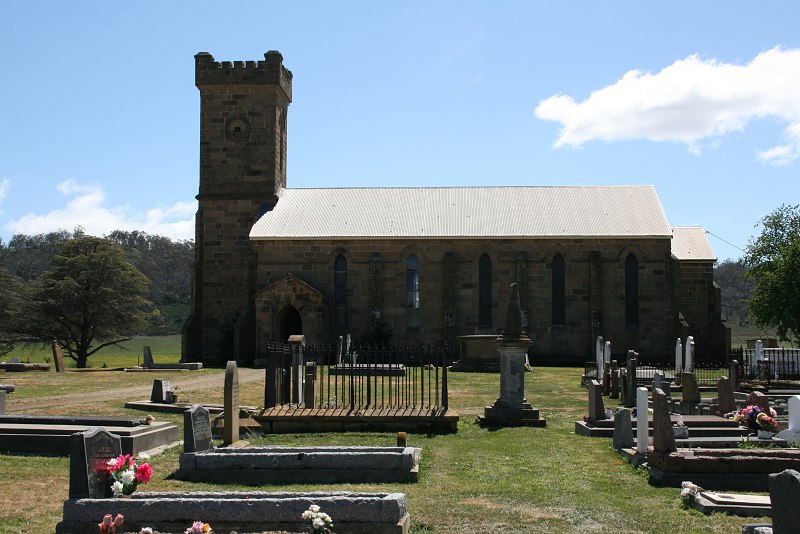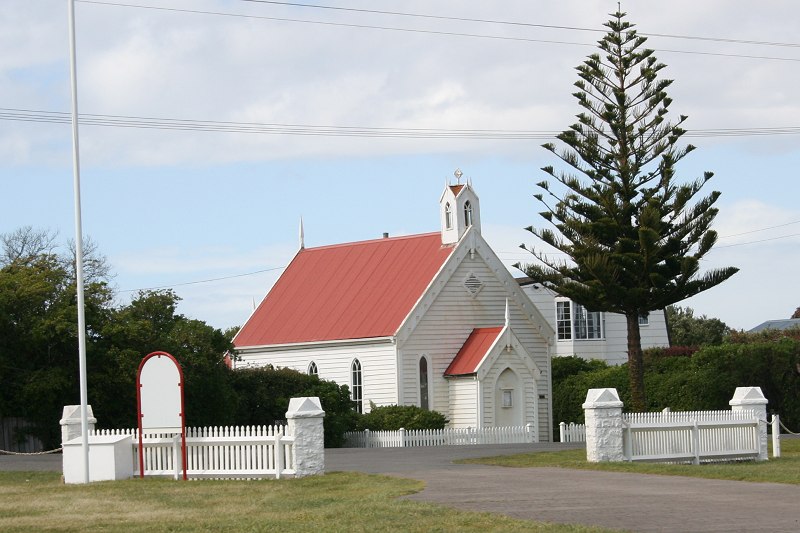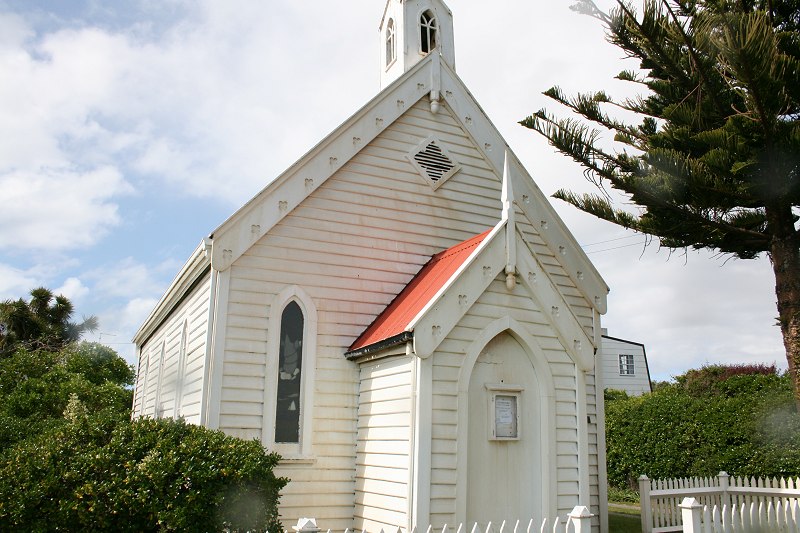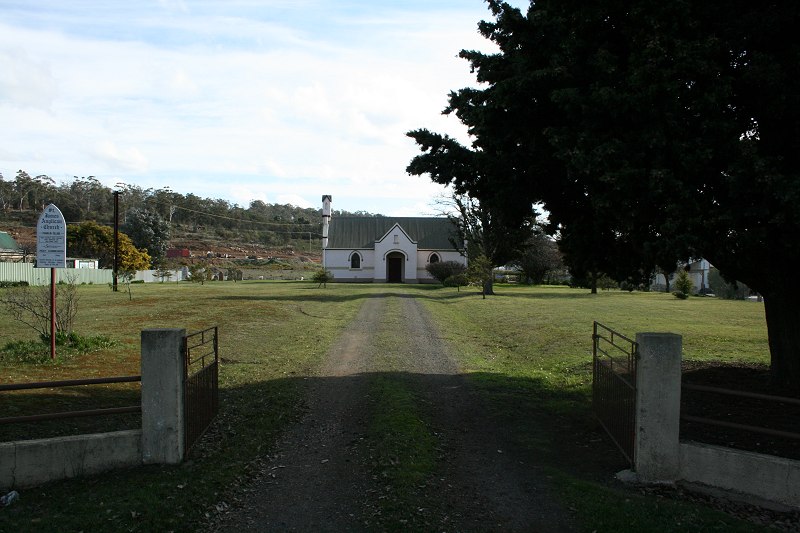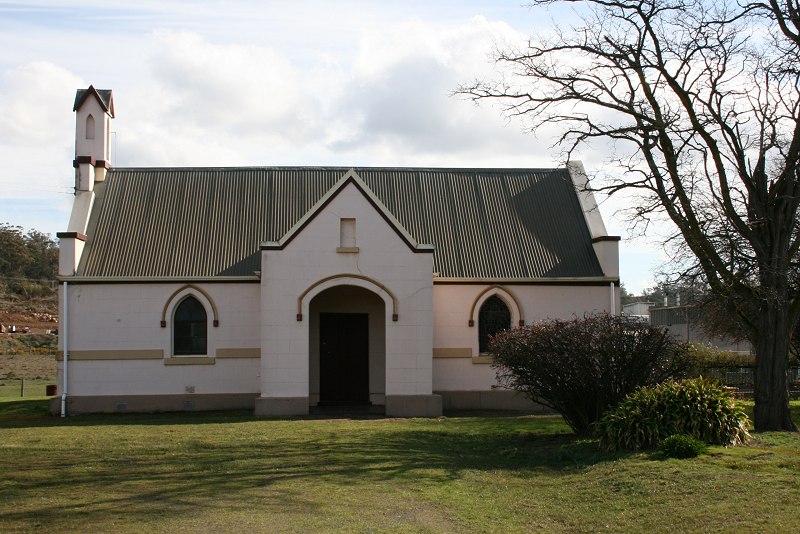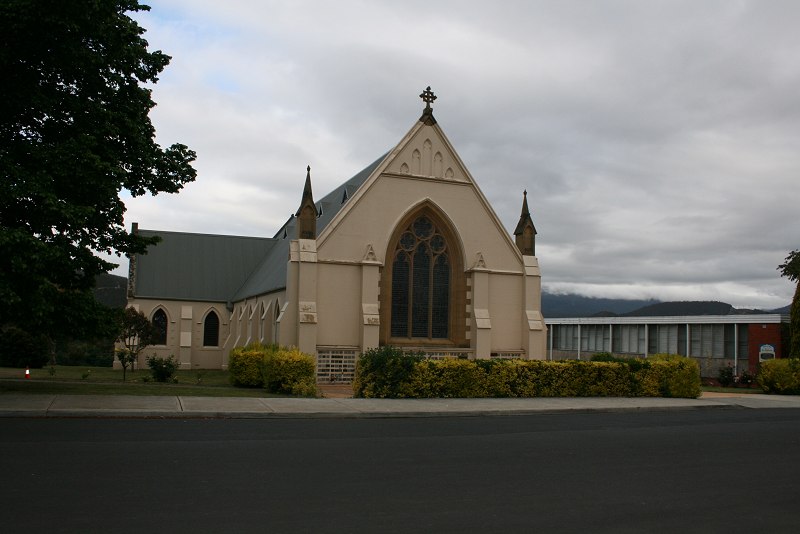
St David’s Cathedral, Hobart (second)

Dscn6679

Cnr Macquarie & Murray Streets, Hobart. (Murrary St entrance shown above.) Opened 1874, replacing an older building of the same name.

Building started 1868. (Laying of foundation stone)
Consecrated & opened 1874.
Chancel, Sanctuary & Nixon Chapel completed 1891-4 (Photo of construction)
Bell tower completed 1936 (Photo of construction)

Website.

Photo with old & new St Davids
Photo 1878, Macquarie St facade. The bell tower has since added at the front left, and the main building extended to the right.
Engraving, 1886, from the corner of Murray&  Macquarie Sts. The vacant corner is now occupied by the bell tower.
Interior, 1895
Photo, 1928. This seems to be a flipped image, compare to 2nd & 4th images on next link
Various photo/postcards (Fifth image is an nice view of entrance & tower from Murray Street
Photo from north with what appears to be the tower of the older church behind.

Dscn6680
North side.
Continue reading

St David’s Church/Cathedral, Hobart (first)

Foundation stone laid 1817
Consecrated 1823 (although in use before then)
Steeple replaced 1835
Became St David’s Cathedral 1842
Demolished 1874 after completion of new (current) building

Plan : Plan : Front elevation : Rear elevation, : Side elevation : Cross-section : Plan for “altering and enlarging” : Front elevation with new tower

GOVERNMENT AND GENERAL ORDERS.
GOVERNMENT HOUSE, HOBART TOWN,
Tuesday, February 18, 1817.
THE Civil and Military Officers are requested to attend at Government House To-morrow Morning at Half-past Eleven o’clock A.M. to accompany the Reverend ROBERT KNOPWOOD to the Ground prepared to lay the Foundation Stone of St. David’s Church. In Consequence of which, the same will be observed as a Holiday throughout the Settlement; and the Acting Assistant Commissary General will cause to be issued to each of the Non-commissioned Officers and Private Soldiers, Superintendents, Overseers, Constables, and other Persons in the actual Employ of Government, Half-a-Pint of Spirits.
By Command of His Honor,
The Lieutenant Governor,
J.B. BOOTHMAN, Clerk.

Hobart Town Gazette, 22 February 1817
Continue reading

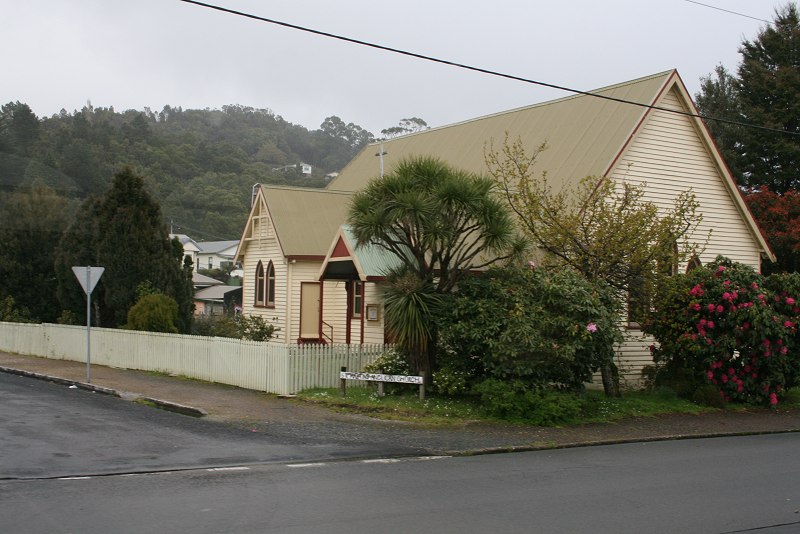
St Martin’s Anglican Church, Queenstown

Img_8235

cnr Driffield and Russell Streets. Google Maps
Memorial window
Photo from other direction

On Sunday last we had a visit from the Rev Mr Copeland, Church of England minister, who held service in the store of the Mount Lyell Company. After service he gave an account of how matters stood with regard to his district, and said his idea was to build a small place at Queenstown to serve as a Sun day school, and to hold service in, and asked the assistance of the people towards that end. A. strong committee was formed, and ere long I hope to see the building erected.
Zeehan & Dundas Herald, 8 April 1896
Continue reading

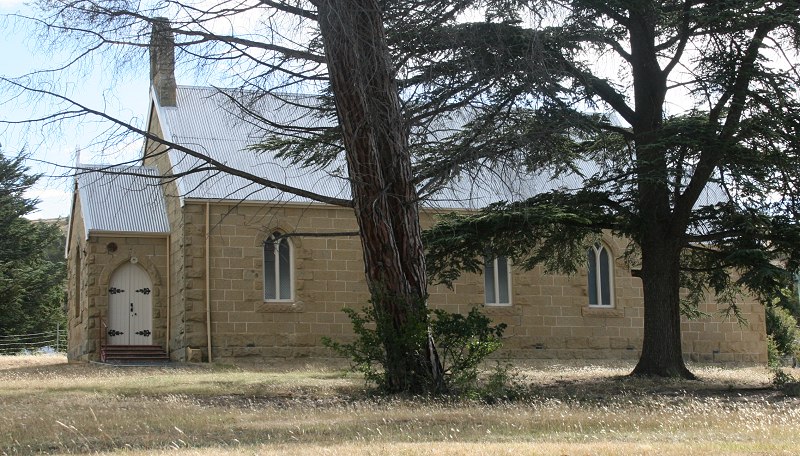
St James Anglican Church, Colebrook

Anglican St James of Jerusalem
Opened 1884.
Location: Google Maps

CONSECRATION OF ST. JAMES CHURCH, JERUSALEM.

The consecration of the new building recently erected by the Church of England, at Jerusalem, took place yesterday. Until now the congregation have had to content themselves with very meagre accommodation. Many years ago the large chapel erected for the convict station which existed at Jerusalem in the olden days, was used as a place of worship, and as it originally held some 800 prisoners, it was amply sufficient in point of dimensions for the reduced requirements of the place. This building, however, fell into sad disrepair some years ago, and after lying useless for a long time, was purchased the other day from the church trustees by Mr. W. Rumney, who has converted it into a barn – a purpose for which it is admirably adapted. During recent years the services of the Church of England (held here fortnightly) have been held in a small weatherboard tenement adjoining the reserve upon which the new church now stands, and which building, in the days of its prime, was used as a schoolhouse. A new church has been talked of for very many years. Forty-three years ago, one old resident asserted, the excavations for a foundation had been made in the vicinity of the present building, but nothing further was done.

The church which was consecrated yesterday was commenced about 13 months ago. It stands on between two and three acres of land in the centre of the township, and is a substantial freestone structure, of no great architectural pretensions, but well adapted for its purpose. It has chancel, vestry, and belfry complete, and though the bell that hangs in the belfry at present tells its tale with much timidity, it will doubtless send forth a more certain voice when it becomes accustomed to its surroundings, and feels that it has a right to be heard. The interior of the church is neatly furnished and fitted up, and has altogether, a very creditable appearance. The pulpit, reading desk, communion table, etc., are not highly ornamented, but are quite in keeping with the rest of the structure. Tho church will seat about 250 persons comfortably, and has been erected at a cost of about £800.
The Mercury, 14 March 1884

Colebrook Check

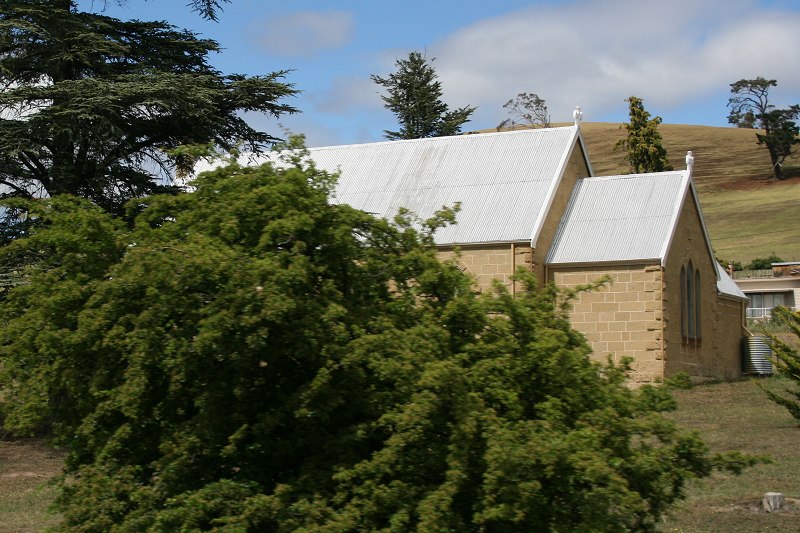
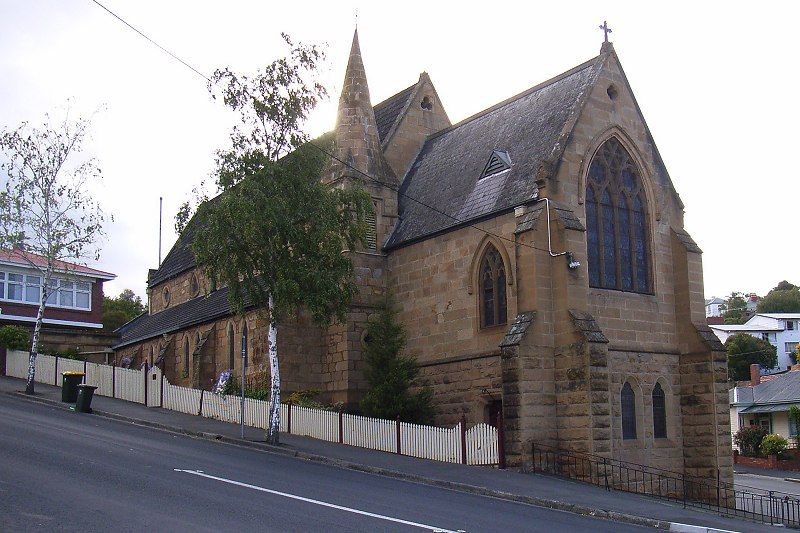
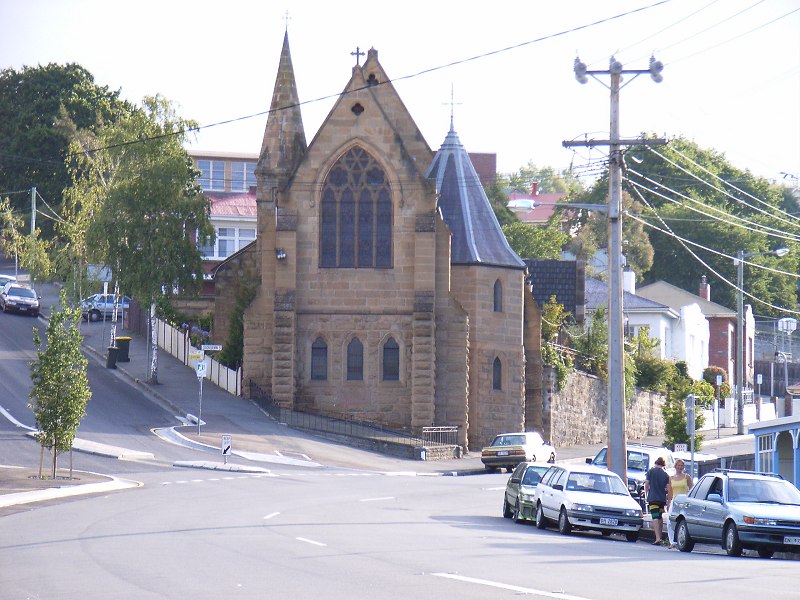
(former) St John the Baptist Anglican Church, West Hobart

Rimg1006
Consecrated 22 May 1856.
Deconsecrated and sold 1998.

Location: Google Maps
Real Estate.com listing for 2011
Photos and background on the organ.

Rimg0998

Image1
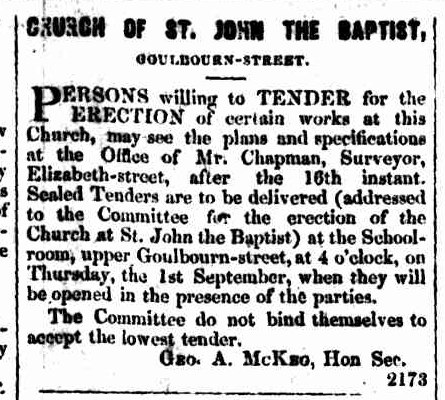
Colonial Times, 13 August 1853

The Church of St. John the Baptist, Goulburn street, Hobart Town, now in course of erection, is calculated to accommodate 500 worshippers, in a locality where additional Church-room is greatly needed. The present contract is for the erection of the walls only, at an estimated cost of £1800. The contract was made on the 1st September last; and the funds then in hand did not exceed £1200, leaving a deficiency of £600, for which the members of the Building Committee are responsible. But it is supposed that another £600, at least, will be required to roof in the building, and render it externally complete.
The Courier, 2 November 1854
Continue reading

St Matthew’s Anglican Church, New Norfolk

Img_5291
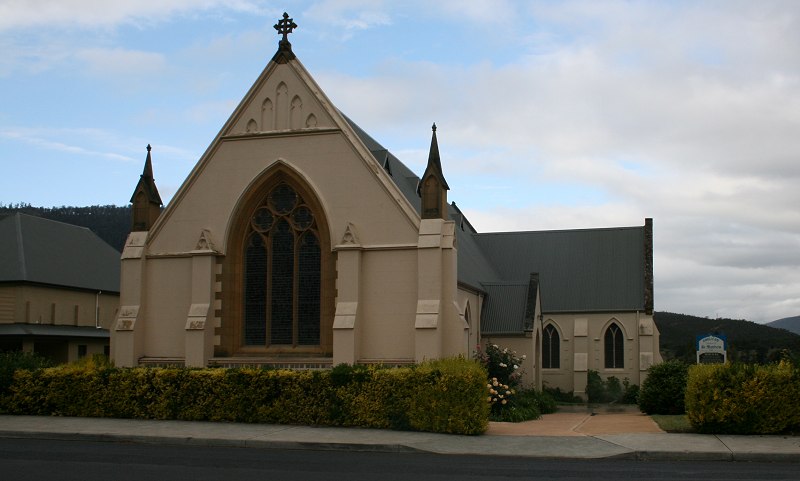
St Matthews lays claim to being the oldest Anglican Church in Tasmania, bring opened in 1823. An article in the Mercury written for the St Matthew’s centenary in 1925 talks about the history of the church:

Mr. Knopwood retired in 1823 from the chaplaincy of Hobart, and come to live in
New Norfolk, and in the same year the inhabitants of New Norfolk applied to
the Governor-in-Chief at Sydney that he might be appointed chaplain of New Nor-
folk, stating that there was a brick school which could be used as a temporary
church.

The arrival of the official minister, Rev Hugh Robinson two years later, and his first service, is the date used for the centenary:

The beautiful church of St. Matthew’s as it now is, its gabled roof, stained glass windows, and noble chancel, is a very different building from what it was when the church was first erected. All that is left of the original building are the walls and flagged floor of the nave, and possibly the western walls of what are now the transepts. And even as to these there is a certain amount of doubt. The foundation stone of the chancel has on it the words, “Erected in 1825, Chancel added in 1894.” But there was a schoolhouse which, begun in 1823, was finished in 1824. Whether this was the present nave or part of it is uncertain, though there is little doubt that a portion of the present church was originally built for a school. It was not used definitely as a church till Mr. Robinson’s time, for, it was in the month that he arrived there, August, 1825, that tenders were submitted for church furniture, and a pulpit, reading desk and communion table put in the building. The carpentry work in the building was of a poor quality; for on Sunday, December 4, 1825, a portion of the ceiling fell in.

As well as obtaining the fittings, that year there was construction work taking place:

We understand with much pleasure, that New Norfolk, the favourite retirement of
Colonel Sorell and other distinguished characters, is rapidly becoming improved.
The church, in which the Rev Robert Knopwood, M. A. regularly preaches has been
considerably enlarged.

Hobart Town Gazette, 22 April 1825

At New Norfolk, the Church is roofed in, and completed.
Hobart Town Gazette, 20 August 1825
Img_5290
Since that time, the building has been extensively modified and its appearance has dramatically changed. A postcard from the State Library of Victoria  with an illustration c.1825 and an engraving from LINC Tasmania, published in 1834 both show a church building very different to that in the above photo.

More recent photos:
This one is dated 1890s (prior to the rebuilding in 1894?)
This, from the early 20th century, has a more familiar form.
Continue reading

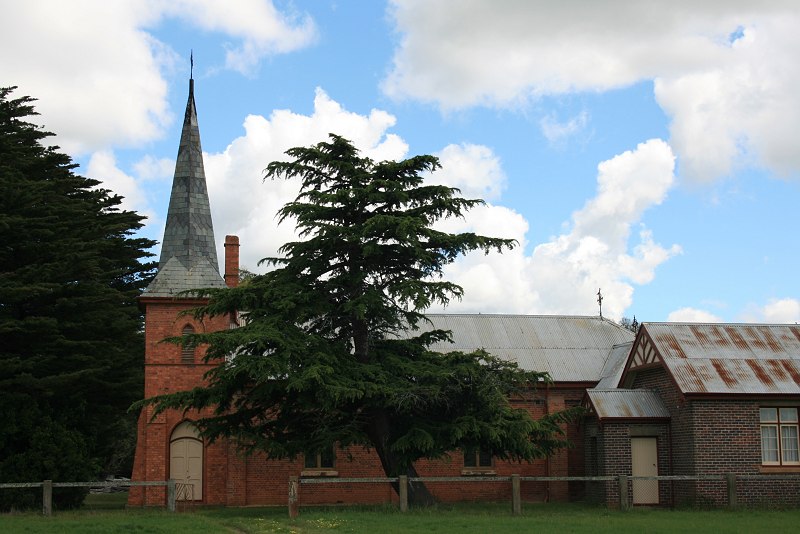
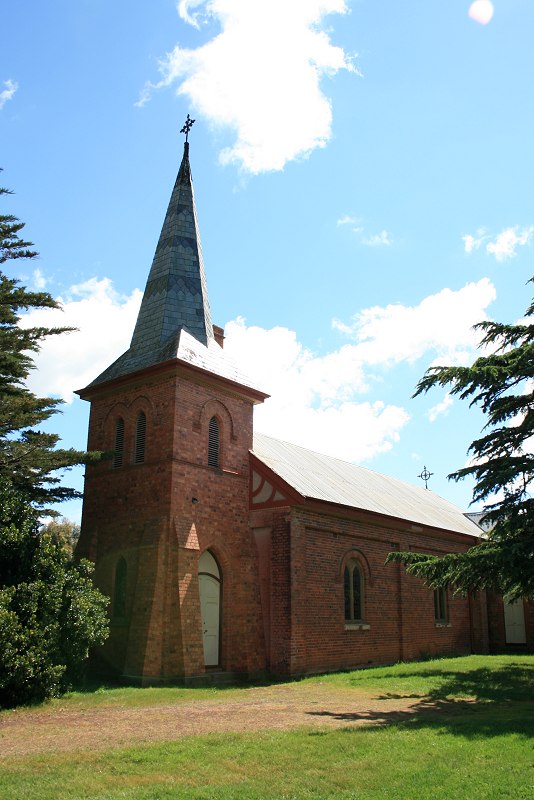
St James Anglican Church, Franklin Village

Img_0918
Opened 1845. Located on the southern edge of Launceston, along Hobart Road, opposite Franklin House.

FRANKLIN Village.-On Monday, at three o’clock, the bishop, attended by the rural dean, (the Rev. R. R. Davies,) and the Revds. Messrs. Stackhouse, Wilkinson, Gibbon, and Dr. Browne, laid the first stone of a building, to be erected for the united purposes of a chapel and school, at Franklin Village; an acre of ground having been given by Mr. Britton Jones for that purpose. There were about three hundred persons present, to whom the bishop delivered an eloquent address, particularly dwelling on the value and importance of scriptural education.
Launceston Examiner, 23 October 1844

At Franklin Village, a church and schoolroom has been built of brick, accommodating about 200 persons. It is proposed to open this edifice at Easter; private subscriptions, aided by the Society for Promoting Christian Knowledge, have been collected to defray the expenditure.
Launceston Examiner, 26 March 1845

Img_0871
CHURCH AT FRANKLIN VILLAGE.-On Wednesday, the Lord Bishop of Tasmania opened the new Church at Franklin Village. Long before the appointed hour, the little building was crowded. At three o’clock, the Bishop, accompanied by the Rev. R. R. Davies, Rural Dean, and the Revds. A. Stackhouse, Thomas Reibey, J. H. Forster, and George Wilkinson, proceeded to the entrance of the Church, where the inhabitants presented a petition, requesting his Lordship to open the building by license. The license having been read by the Rural Dean, the prayers were read by the Rev. A. Stackhouse, and the Bishop preached from the text, “My house shall be called a house of prayer.” He took occasion in the course of his sermon to express his sorrow at the want of reverence too manifest in many congregations of his church, who continued negligently sitting or standing during the prayers ; and expressed the gratification he felt at witnessing, as he did that day, a whole congregation on bended knees in the appropriate attitude of prayer.

After the sermon, the Bishop, accompanied by the clergy, perambulated the burial ground, and the deed, &c, having been read by the Rural Dean, and inspected by the Bishop, his Lordship proceeded to the consecration of the ground. The sum of 15/. 3s. was collected after the sermon.
Launceston Advertister, 18 April 1845
Continue reading