Category Archives: Church: Other
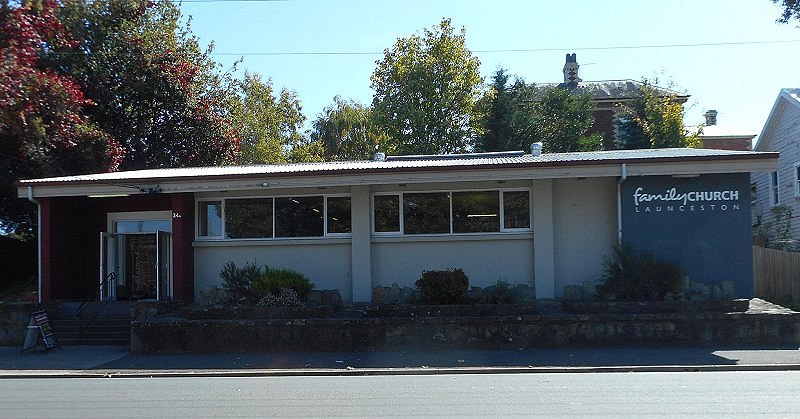
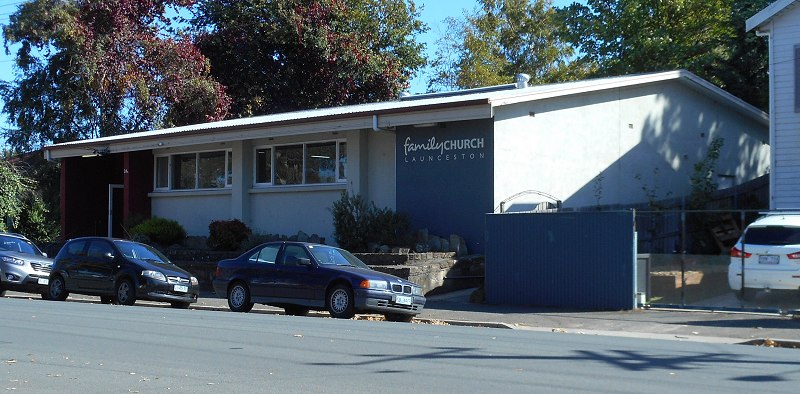
Family Church, Launceston
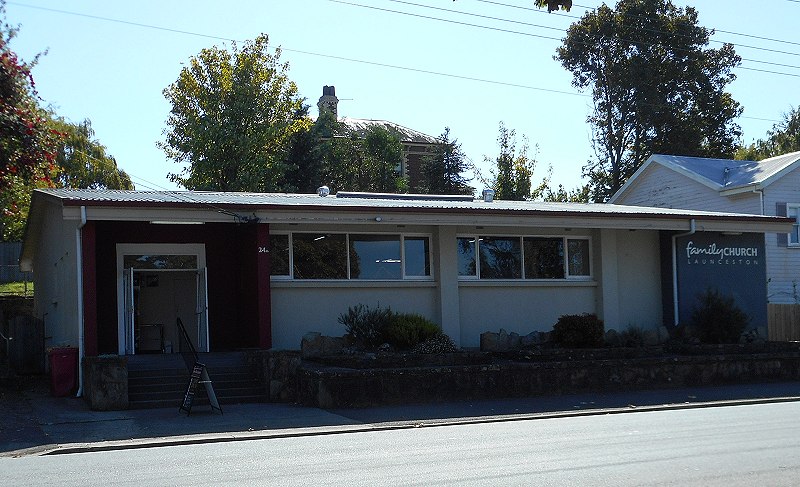
24a Forster St, Invermay.
Website
From Launceston Historical Society’s “Launceston Churches of the 20th Century”:
Church was built by the Jehovah’s Witnesses in 1966 and purshchsed by the Apostolic Church in 1990, who had previously constructed a church in Abbott St.
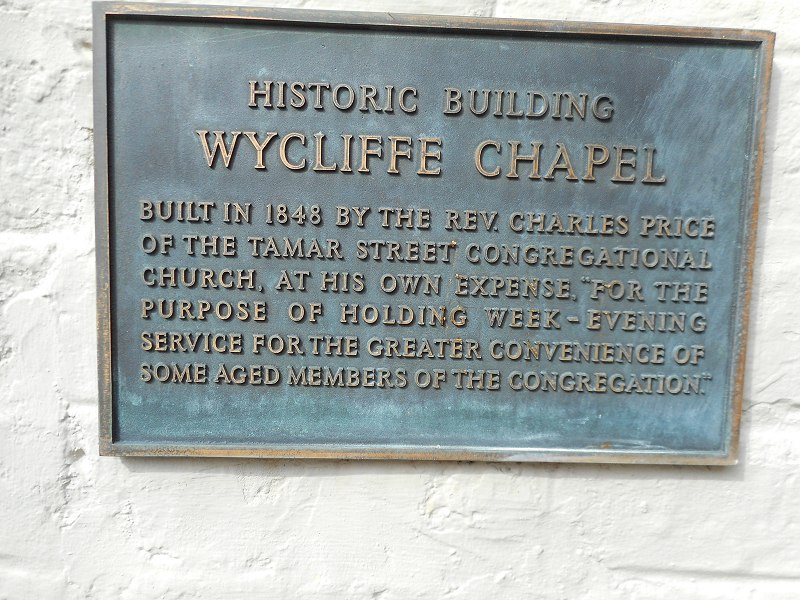
(former) Wycliffe Chapel, Launceston
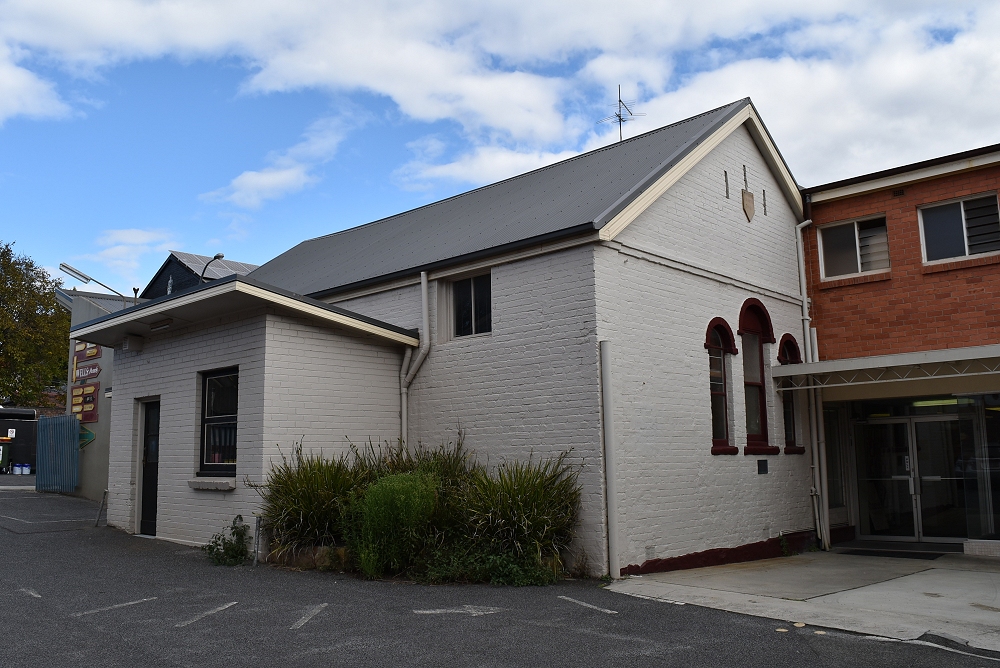
(former) Misson Hall & Methodist Church, Evandale
Built as a multi-denominational mission hall in 1882.
Opened as Wesleyan church in 1885.
Demolished?
EVANDALE MISSION HALL.-A correspondent at Evandale, writing on Thurs day, says;– “The Mission Hall in this place has been erected to the order of Mrs. Henry Reed, at a cost of upwards of £400. The building will seat between 100 to 200, and is an ornament to the township. Pastor Hiddlestone con ducted the opening service on Sunday last, when, despite the inclemency of the weather, about 120 or so attended. Pastor Williamson conducted the evening service to an attentive audience. Special services have been held by Pastor Williamson and Hiddlestone each evening during the week with some measure of encouragement. The Mission Band came out from Launceston on two evenings, and by their playing through the town ship, enlivened the people, and quite a large number came to the services.
Launceston Examiner, 27 October 1883
The Mission-hall was opened on Sunday week by Messrs. Hiddlestone and J. L. Smith, and, notwithstanding the inclemency of tho weather, a good number were present. Mr. Smith said that the hall had been built by Mrs. Reed for evangelistic purposes, and invited Christians of all denominations to help. Pastor Williamson, of Perth, preached in the evening to a large congregation, and services were held each evening during the week by Pastor Hiddlestone, Williamson, Bond (of Deloraine), Smith, and other gentlemen. On two occasions the services of a brass band were brought into requisition,, much to tho delight of tho young people? Tho meetings were very orderly.
The Mercury 31 October 1883
Continue reading
Bethel Chapel, Launceston
BETHEL CHAPEL. THE want of accommodation for public worship at the wharf, has long been a subject of regret. Services have sometimes been held during summer on the decks of vessels, but no united effort has been made in this town to supply the spiritual destitution of seamen visiting the port. It is seldom that sailors leave their vessels on the Sabbath to enter a church; but a bethel chapel is peculiarly their own; and at Sydney and Hobart Town the attendance is generally good. We are gratified to learn, that his Excellency has acceded to a request recently made, and has sanctioned the erection of a place of worship on the wharf for the use of seafaring men. The chapel will be built by public subscription, on the north side, and immediately adjoining the custom-house shed, and sup plied in rotation by clergymen belonging to various denominations.
Launceston Examiner, 19 July 1845
ERRATUM.-The Bethel Chapel will be erected on the south side of the custom-house shed, and not on the north, as erroneously printed in our last.
Launceston Examiner, 23 July 1845
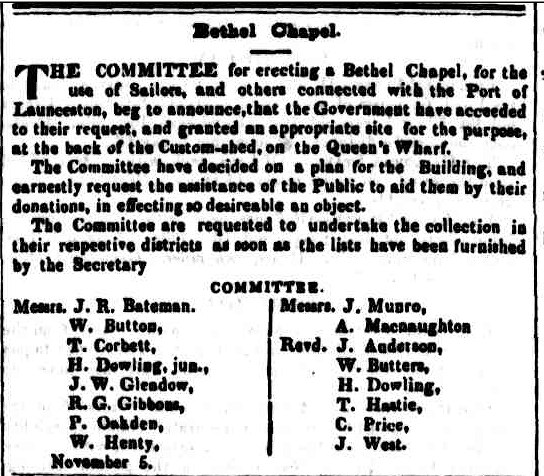
Cornwall Chronicle, 5 November 1845
Continue reading
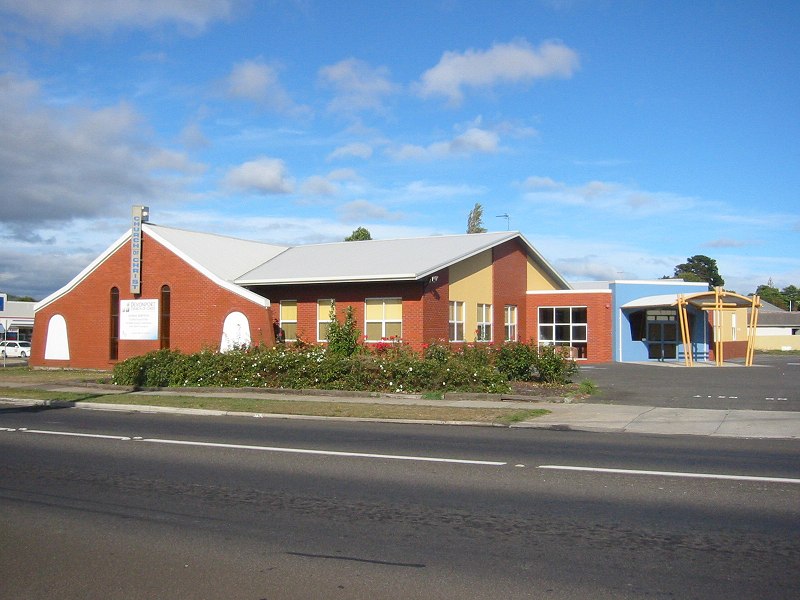
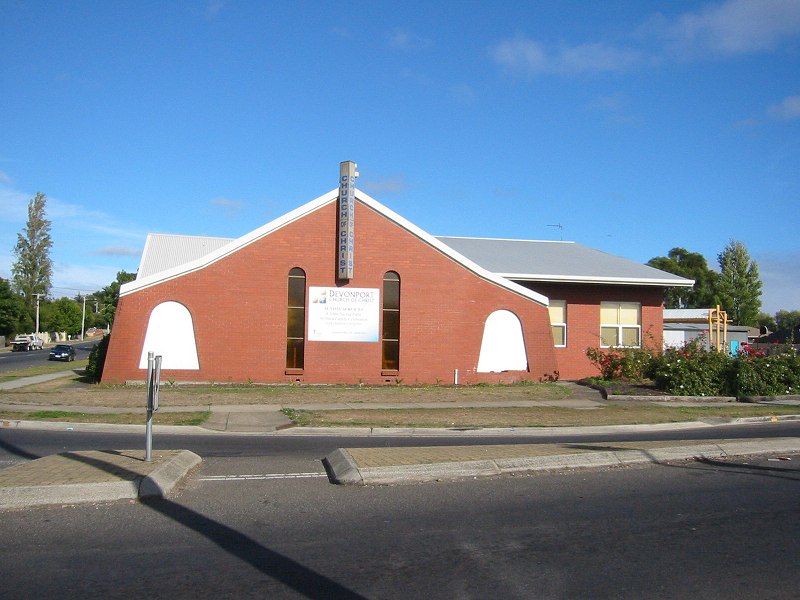
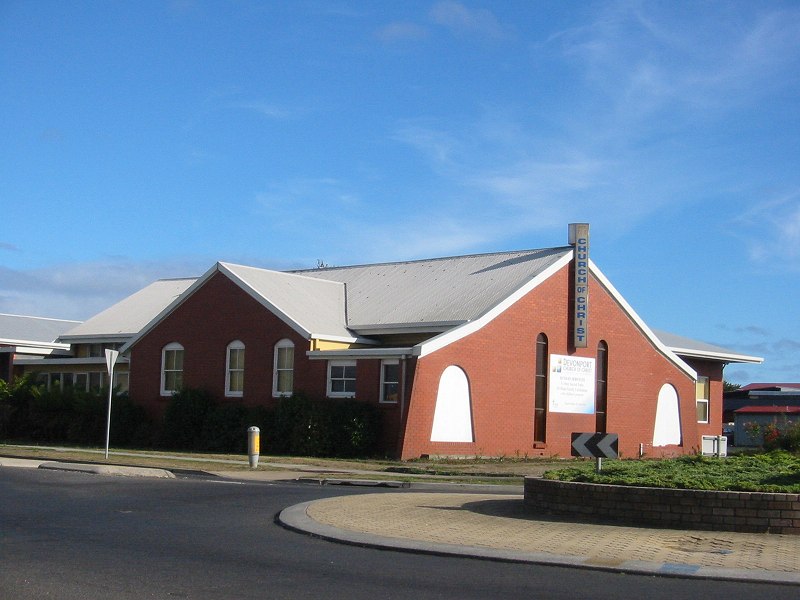
Church of Christ, Devonport
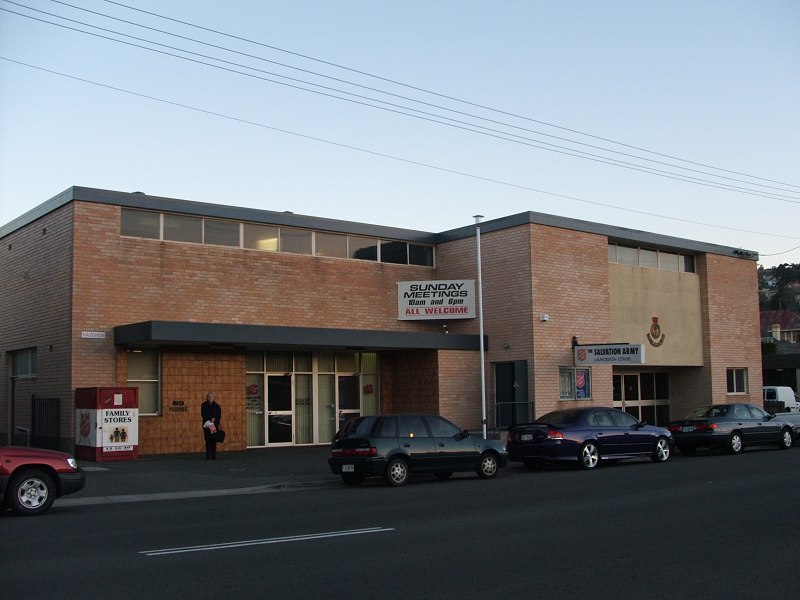
Salvation Army Corps, Launceston
Original citadel opened in the 1880s. It can be seen in the background of this photo (almost in the centre of the photo).

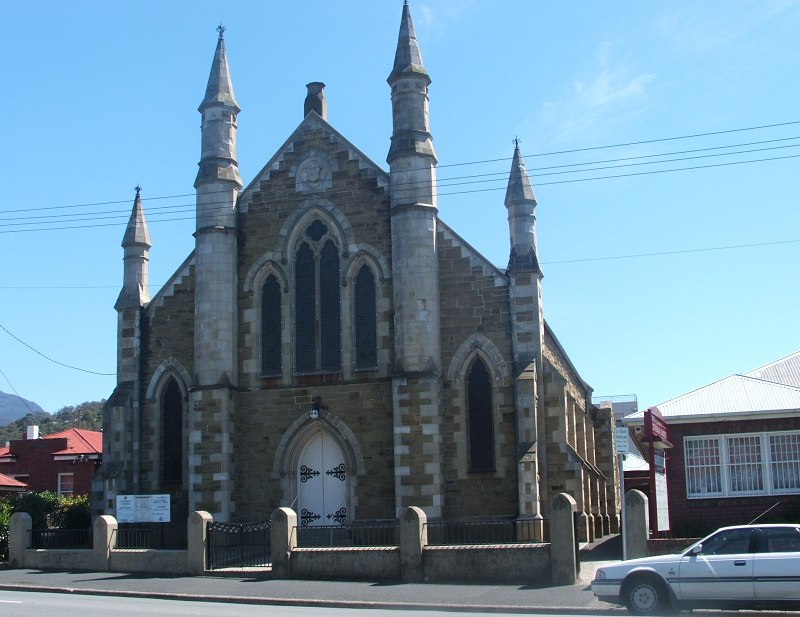
(former) Davey St Methodist & St Peters Lutheran Church, Hobart
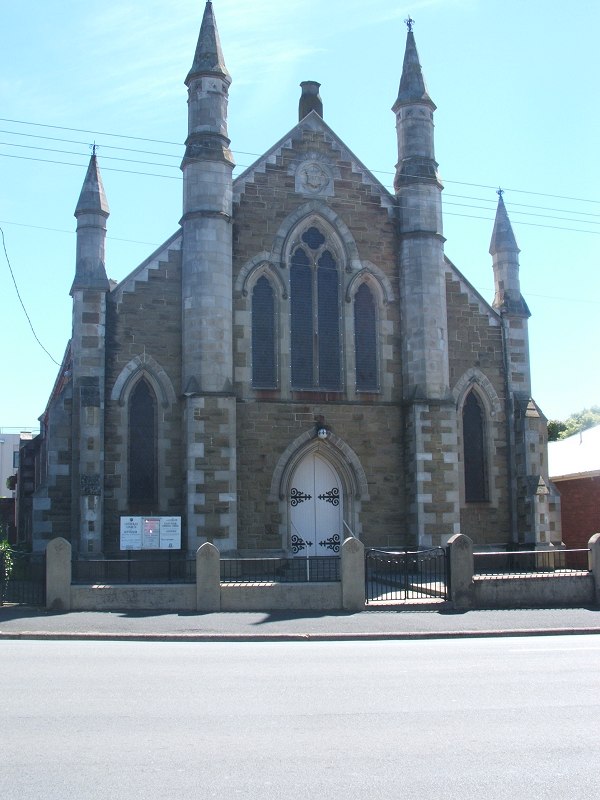
207 Davey St, South Hobart. Google Maps
Opened 1871 as a Wesleyan Church
Bought by Lutheran Church in 1970s
Sold in 2012
Some history and better photos
Door of Hope Christian Church, Launceston
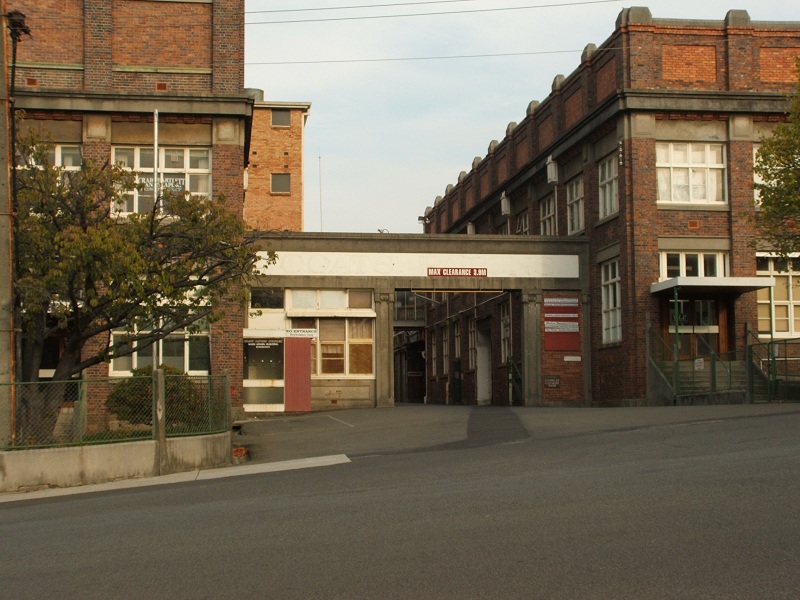
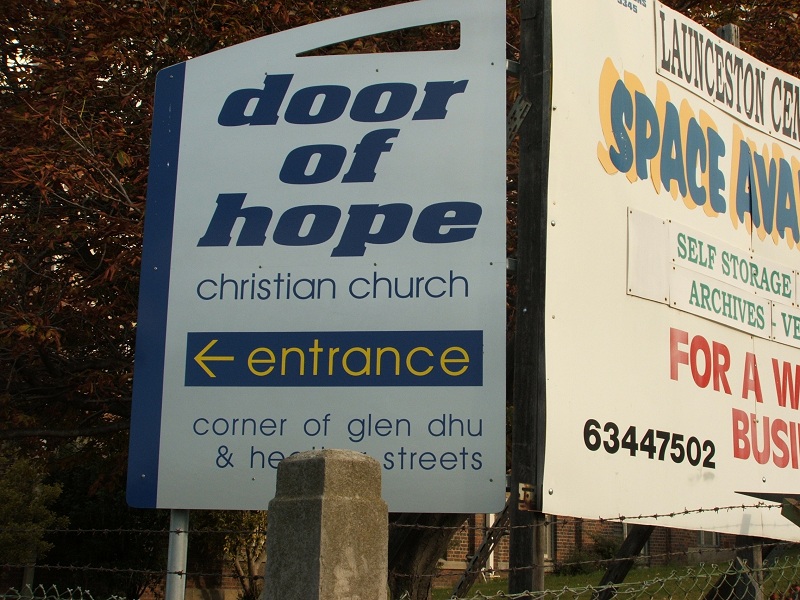
From their website: Since 1884, Door of Hope Christian Church has been meeting in different locations across Launceston allowing people to join together in community and worship our great God. And since 2003, we’ve been inhabiting the former Patons and Baldwins (later Coats Patons) factory, again another significant institution in the life of our city.
Continue reading
(former) Chalmers Church, Launcestom
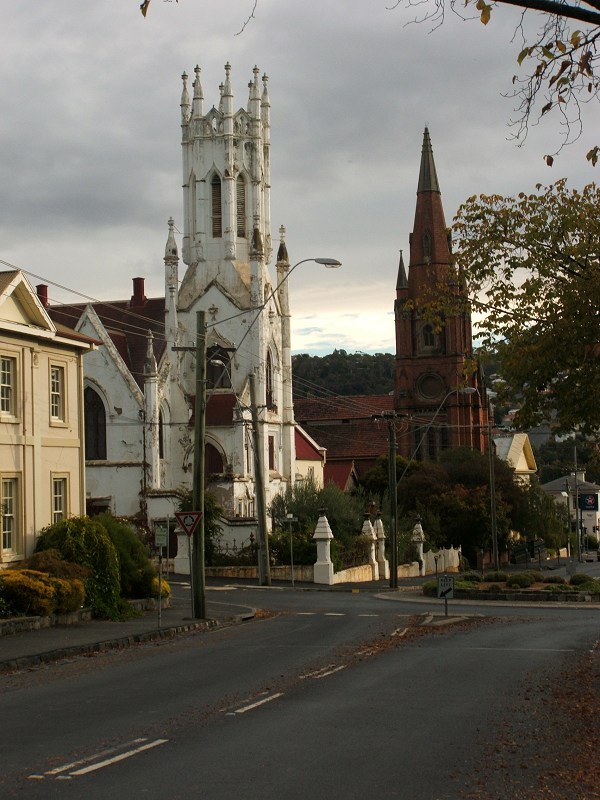
Constructed in 1859 as the Free Church of Scotland, later Presbyterian.
In the 1970s, the congregation that used Chalmers Church became part of the Uniting Church, and a few years later, moved to Pilgrim Church in Paterson Street. The church was de-consecrated in 1981. A short history on the Pilgrim Church website has this background to the construction of Chalmers:
While the other denominations were busy, so too was a band of Presbyterians. In 1840 – 1850, they worked together to form the Van Diemen’s Land Free Church of Scotland. On 11th May, 1844, the Launceston group formed “The Launceston Free Church Association” for the purpose of supporting those ministers in Scotland who had chosen to secede to the Free Church rather than remain with the established Church of Scotland and submit to the dictates of parliament. They hired a room belonging to a Mr. Bell and began a Sabbath School, conducting a Divine Service when a minister was available. An appeal was made to the Assembly of the Free Church for a permanent minister and the Rev. James Lindsay was appointed on 7th December, 1850. A move was then made to Wycliffe Chapel, York Street and the Temperance Hall. On January 19th, 1859, a special service was conducted in the Wycliffe/Baptist Chapel, followed by a procession to the site of the proposed Presbyterian Church and the foundation stone was laid. Twelve months later, 15th January 1860, Chalmers Church was opened. It was named after Dr. Thomas Chalmers who in 1859 took a strong stand on Assembly’s declaration “… that the Church should not submit.”