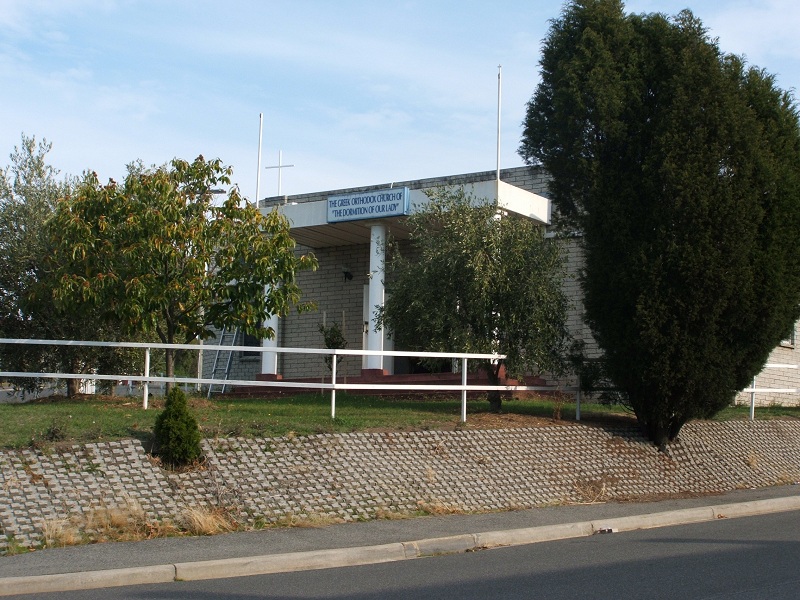
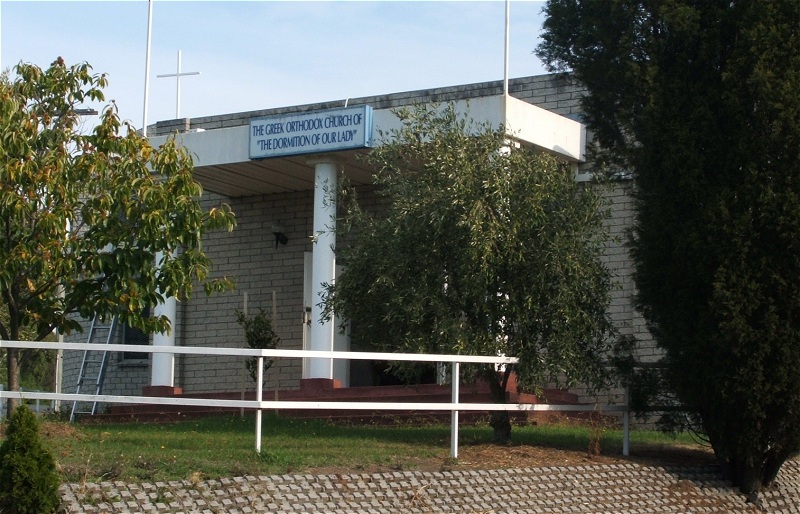
Opened 1992.
Category Archives: Region
Henry Reed Memorial Baptist Church, Wellington St, Launceston

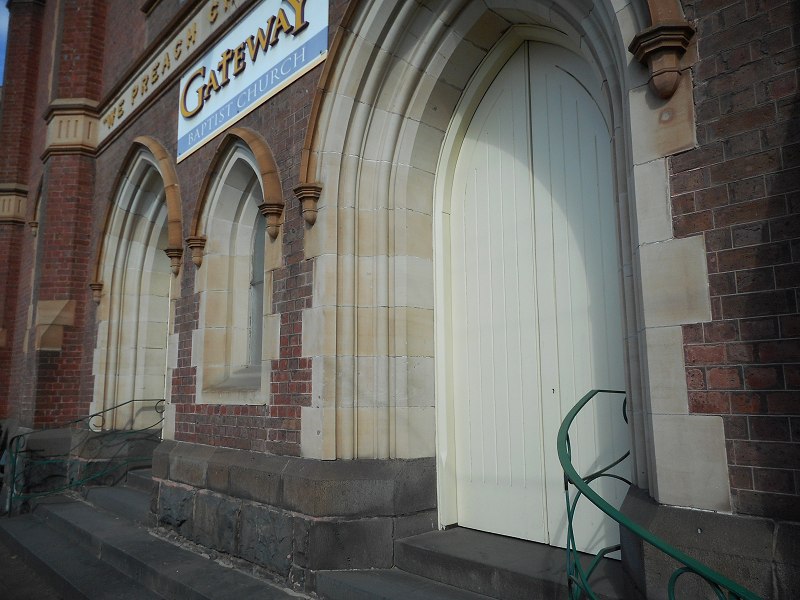
Opened 3 July 1885 as a Christian Mission Church, to replace the smaller building that is now behind. Later became a Baptist Church. Now (2015) operating as a Gateway Baptist Church, with the Korean Full Gospel Church behind.

New church beside former mission church and office
[Memorial Baptist Church, Launceston, Tasmania, ca. 1880s?], National Library of Australia
Interior
Wellington St, showing church in context
TOWN IMPROVEMENTS
THE TEMPLE.
The following brief description of the new Mission Church — or, as it is termed, The Temple — in Wellington-street, may be interesting. The site of the building originally formed a portion of the premises of the Royal Hotel, which was purchased by the late Mr. Henry Reed in 1876. It appears that one of Mr. Reed’s horses met with an accident on its way in from Mount Pleasant, and was taken to the Royal Hotel for treatment by the late Mr. H. D. Parr. Mr. Reed visited the stables whilst the animal was there, and upon one occasion remonstrated with Mr. Parr as to his calling as a publican. The genial old landlord remarked that he was doing very little, and would not be sorry to relinquish business in Wellington-street if he could find a purchaser. Negotiations followed, which resulted in Mr. Reed’s buying the property, and the hotel being closed. In 1876 Gospel services were held in the skittle alley attached to the premises, and in 1880 the building known as the Mission Church was opened, and the crowded congregations which attended the services there soon made it apparent that a new building was necessary, and thus ‘The Temple’ sprang into existence.
The inscription on the foundation stone informs us that it was laid ‘In memoriam Henry Reed,’ on the 19th July, 1883, by Mr. J. L. Smith. The building is of Gothic design adapted to modern requirements, and is composed of brisk, with white stone dressings (obtained from the Ti-tree quarry near Hobart) ; the foundations are of bluestone, having a dressed Footscray stone base course all round, and the roof is slated. The front is divided into three bays of semi-octagon banded and pinnacled piers. In the centre are two pairs of folding doors with deeply recessed moulded openings. Above the doors is a gold band on which is inscribed ‘We preach Christ crucified;’ above this is a handsome columned window over which is the inscription in raised gilt letters ‘Jesus only, mighty to save.’ About 50 feet from the ground is the clock, of which we gave a full description in a recent issue, and higher up again is the belfry. The side elevations are broken into bays, the windows being mullioned. Entering from Wellington-street we find ourselves in a roomy vestibule, from which we pass through one of the two side doors into the church itself. The enormous extent of the accommodation provided and the completeness of the fittings at once attracts the attention of the visitor. It is fitted up with polished cedar seats (each of which is supplied with a book rack), which are so arranged that all the congregation face the preacher. The ground floor has a slope of about two feet towards the plat-form. The ceiling is flat and averages in height a little over 32 feet.
There is a gallery, supported upon iron columns, which are finished in chocolate and gold, across the front and down the two sides of the building, its front being of blackwood with cedar panels. At the western end is a roomy preaching platform, upon the cedar railing of which is a reading desk. Underneath the platform is the baptistry, and upon the wall behind it is a marble tablet to the memory of the late Mr. Reed. In the centre of the western wall there is an alcove curved in plan, and covered with a semi-dome ceiling, and round its arch is the text, ‘Grace be with all them that love our Lord Jesus Christ in sincerity.’ There are also two other texts upon the wall. These scrolls are executed in gold letters upon a ground of delicate French grey, and the effect thus produced is exceedingly chaste. They are the workmanship of Mr. Edmunds, foreman for Mr. G. French, and reflect great credit upon his artistic skill. One novelty in the building will be found in the corners, which are curved, and form quadrants of about 3ft. 6in. in radius. The galleries are approached by two flights of stairs from the front vestibule, and there is provided sitting accommodation for 1150 people in the building, folding seats, to be used in cases of emergency, being erected in the galleries. At the western end of the church there are two doors opening on to lobbies, which provide side entrances to the main building and to the two vestries — one of which will accommodate 100 persons. Lighting is provided by two handsome sunlight opal glass reflectors in the ceiling, platform lights, and bracket lights under the galleries. The ventilation should be ample ; there are two air flues in the sills of each of the windows, which open and close; all the windows themselves can be opened, and provision is made to carry off vitiated air by means of flues in the walls, and others over the sunlight gas reflectors. A handsome iron failing on a bluestone foundation will be erected in front of the building.
Mr Frank Tyson, architect, prepared the plans and supervised the work. Mr. J. T. Farmilo was the contractor for the building of the church, and Mr. R. W. Roe for the erection of the seats, whilst Messrs. Owen and Son, of Longford, placed the clock in position. The contracts for foundations, superstructure, and seating amounted to £8909, but this does not include either fencing, gas-fitting, or the clock. The total cost will most likely be over £10,000. The building, as our readers are aware, has been erected at the expense of Mrs. Reed, and we are informed that she intends to hand it, together with the school-house (the old church) and pastor’s residence, over to trustees on behalf of the congregation, who will be asked in future to contribute the pastor’s stipend. The building is a handsome one, and a valuable addition to the architecture of the town.
Tasmanian. 4 July 1885
THE OPENING OF THE TEMPLE.
To-day will see the consummation of the work begun by the late Mr Henry Reed for providing a suitable place of worship for the congregation he drew together during the later years of his life. The building is worthy of its object, and as one of the principal edifices of its kind, will attract praise from all who visit it, whether townspeople or visitors, both for its style of architecture, and the chars iter . of the workmanship evidenced in all its details. Designed by Mr F. Tyson, its foundation stone was laid nearly two years ago, on July 19, 1883, by Mr J. L. Smith, of Cambock, in the presence of a large number of members of the Mission Church. To-night it will be open to the public for the first time, after a tea meeting, held in the adjoining Pavilion shortly after 5 o’clock, its inauguration as a place of divine worship being celebrated by a number of addresses from Pastor Hiddlestone and the leading members associated with him.
Daily Telegrah, 3 July 1885
Continue reading
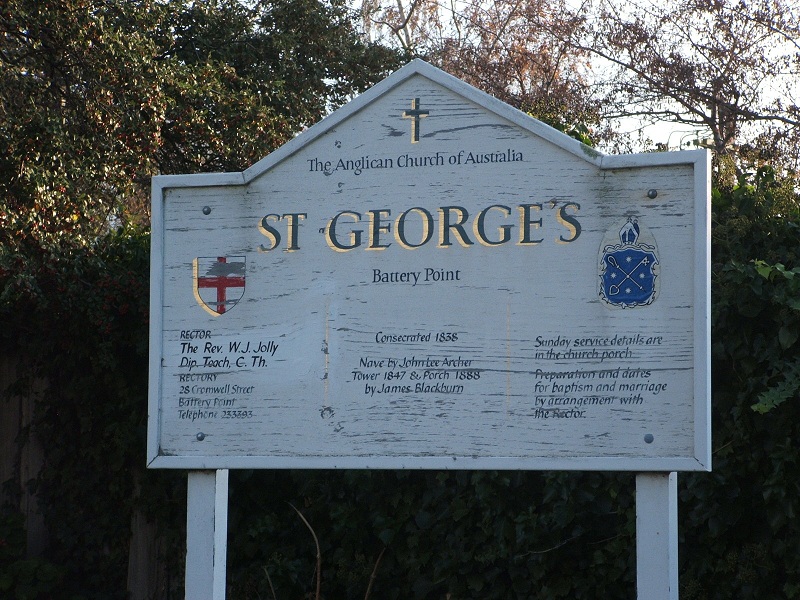
St Georges Anglican Church, Battery Point
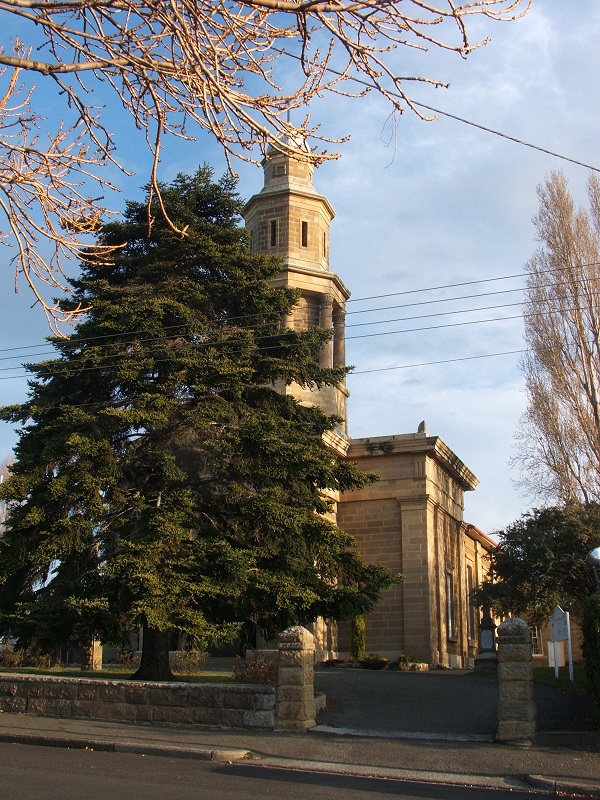
Consecrated & opened in 1838
Website
Organ Historical Trust has better pictures.
Wikipedia article
Facebook page
Gospel Hall, Launceston

66A Elizabeth Street. Opened 1939. Sold 2014
Continue reading
Wesleyan Church/Uniting Church/Buddhist Centre, Invermay
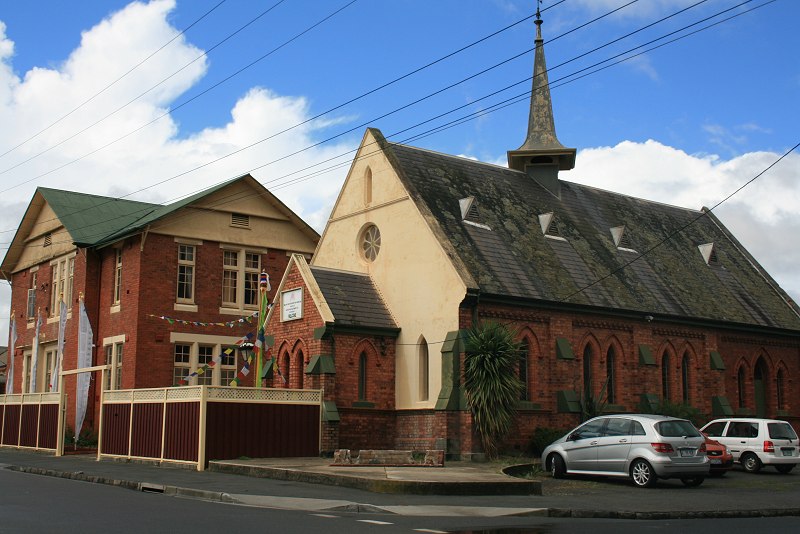
Bryan St, Invermay. Google Maps.
Opened 21 February 1892.
Later a Uniting Church following the amalgamtion of churches to create the Uniting Church of Australia. Sold about 2000 and became Palpung Kagyu Thigsum Chokyi Ghatsal Tibetan Buddhist Institute.
First six photos are from 2012. Later photos, without fence, from 2005.

St Andrew’s Presbyterian Church, Launceston
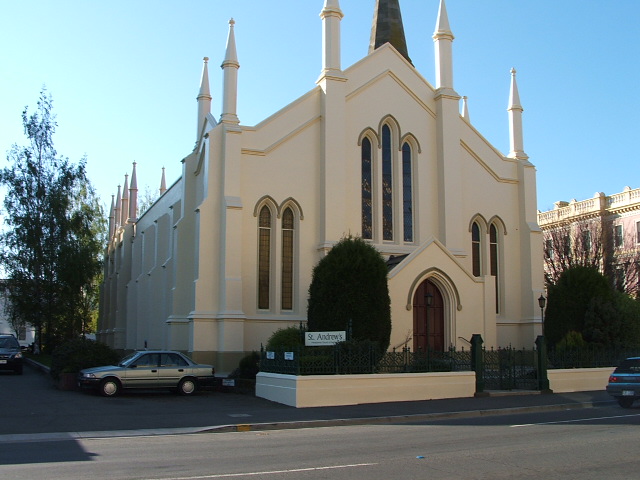
Opened 1850, to replace the Scottish National Church in lower Charles St.
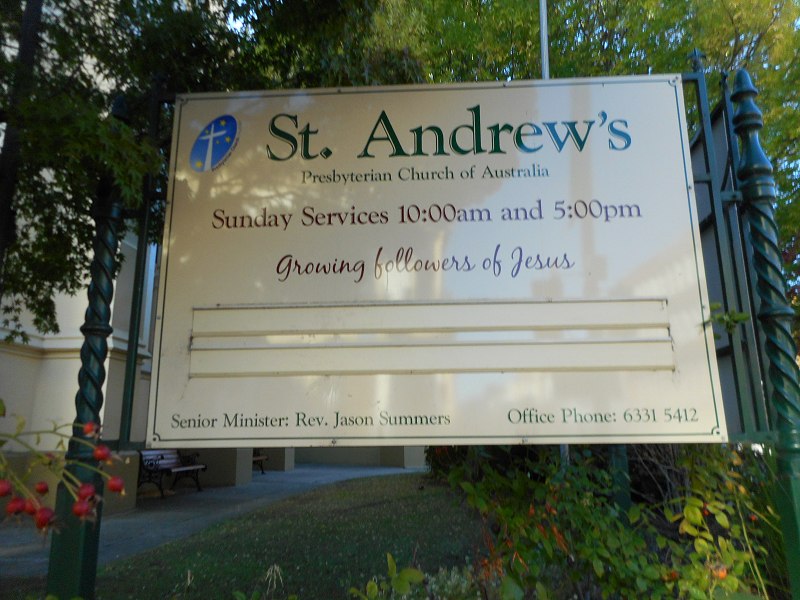
SCOTCH CHURCH.
THE FOUNDATION STONE of the Launceston “St. Andrew’s” has been laid : the work is in rapid progress, and at no remote day will be opened for the celebration of divine service. The presbyterians of this town were too long content with a place of worship inferior in every respect to that of any other denomination. But they awakened from their lethargy, and now aspire to occupy a public building which will be the most conspicuous ornament in the north. The munificence of some of the subscribers merits praise : they have come foward in a spirit of liberality which reflects honor on the profession they make. But the sum to be expended far exceeds the amount guaranteed; and although the building committee have faith in the result, we should be gratified to see them relieved from a responsibility too onerous for individuals to discharge. Let every presbyterian, how ever humble, put the question to himself: what more can I afford for the cost of this fabric ? and especially let the prosperous in that communion, both in Launceston and elsewhere; consider seriously what they can spare for the work. The building in which service is now conducted, with the land attached, would sell for a considerable sum, and should its alienation be necessary, we trust the lieutenant-governor will not refuse his assent. We hope this will be conceded, and that the presbyterians will be left at liberty to dispose of their abandoned place worship, and to apply the proceeds in liquidation of the debt, which after all their exertions must be incurred for the new and beautiful edifice.
Launceston Examiner, 27 October 1849
Continue reading
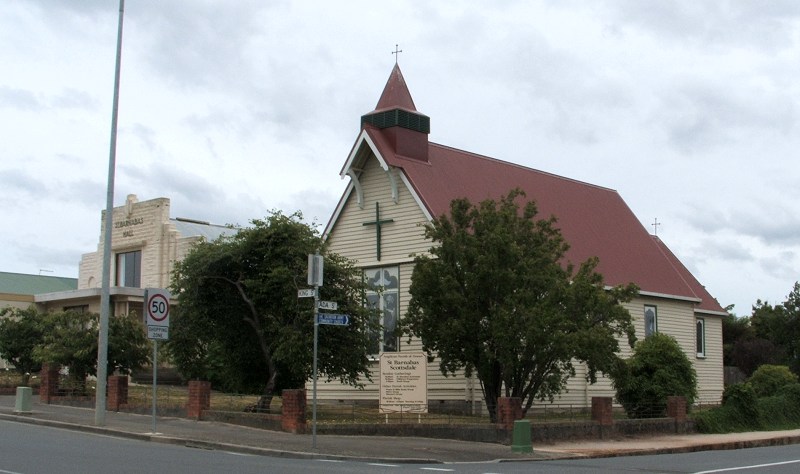
St Barnabas Anglican Church, Scottsdale
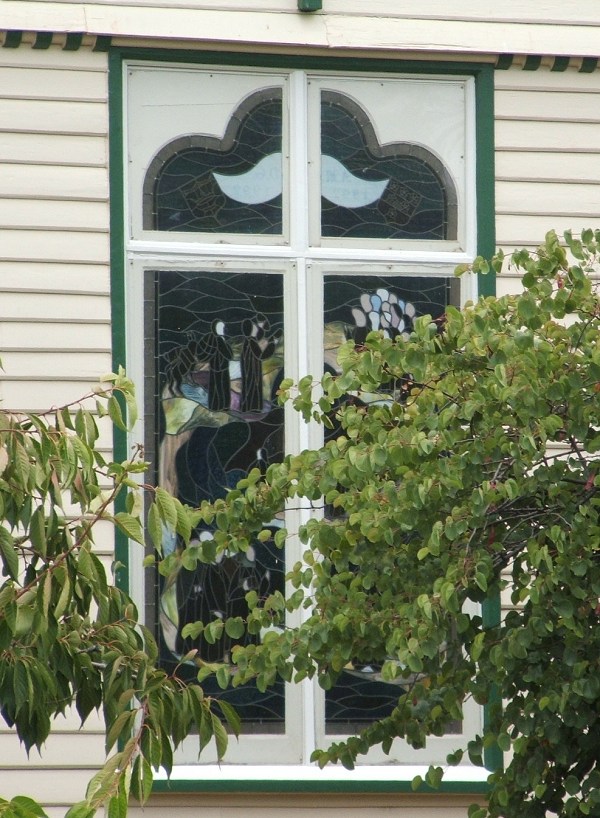
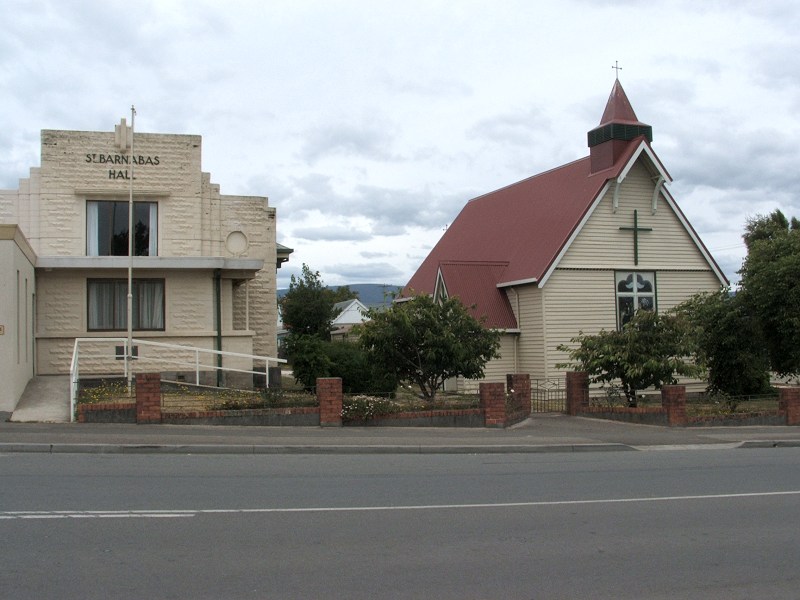
Paterson St Methodist/Pilgrim Uniting Church, Launceston
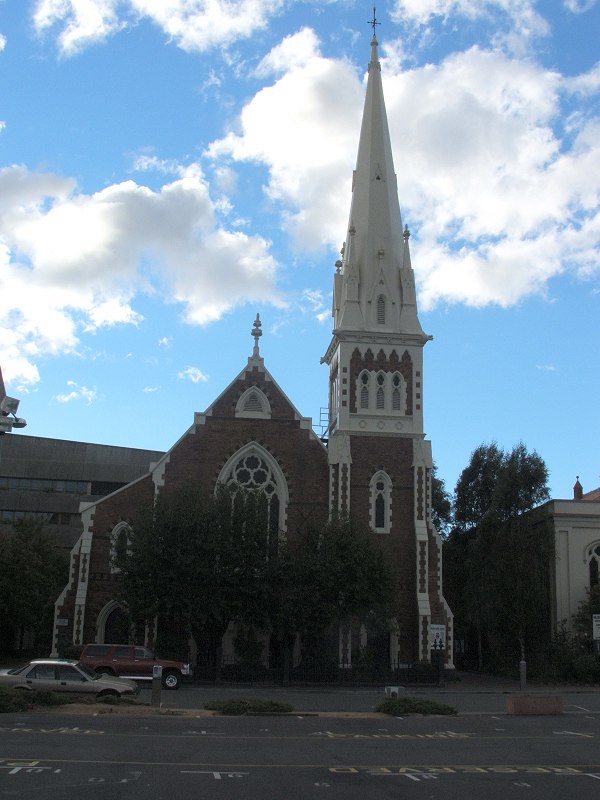
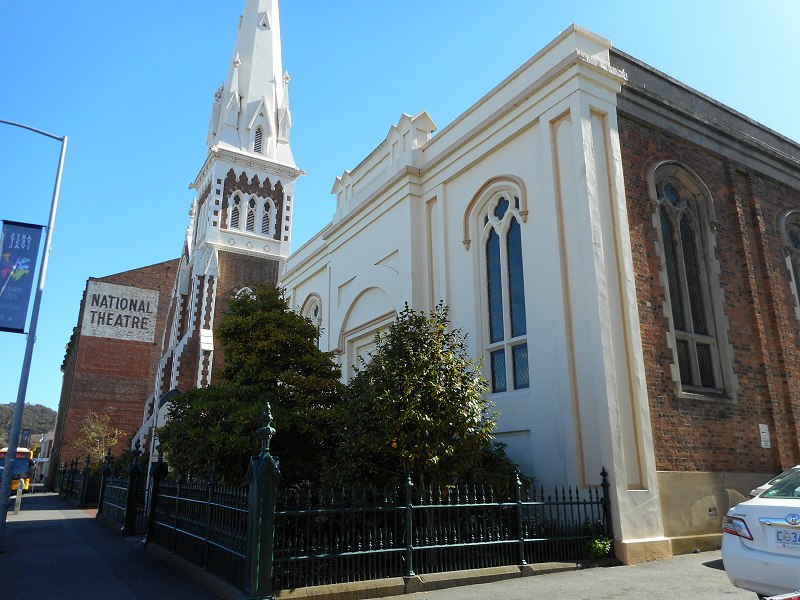
Opened 21 February 1868, after the congregation outgrew the original Wesleyan Chapel next door, which is now the church hall. The name was changed in 1982 after the joining of three congregations (see below) with the creation of the Uniting Church. The website provides a account of the background and construction of the church (Pilgrim History for Web near bottom of page).
former Anglican Church, Ringarooma
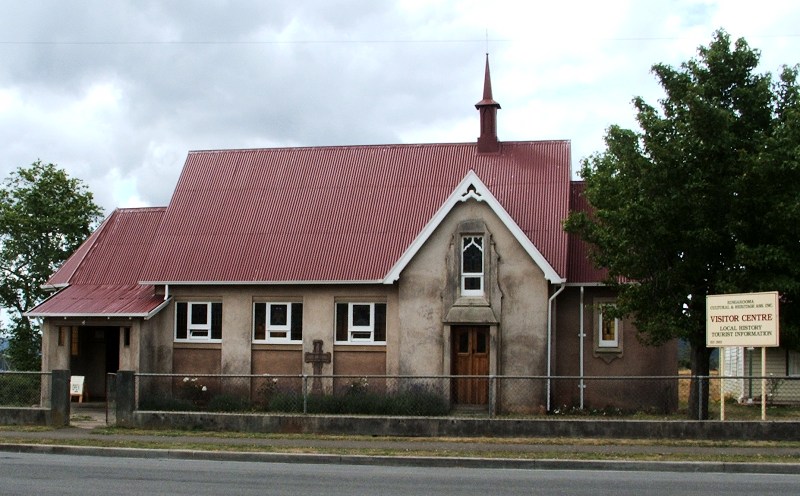
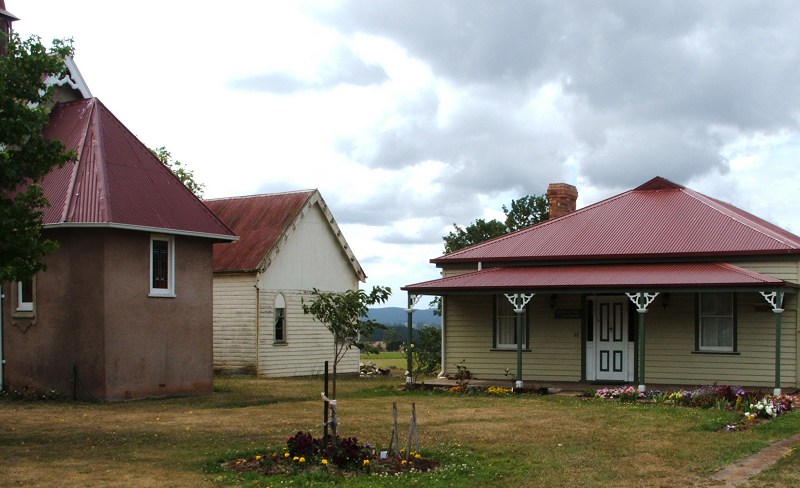
Church, Legerwood
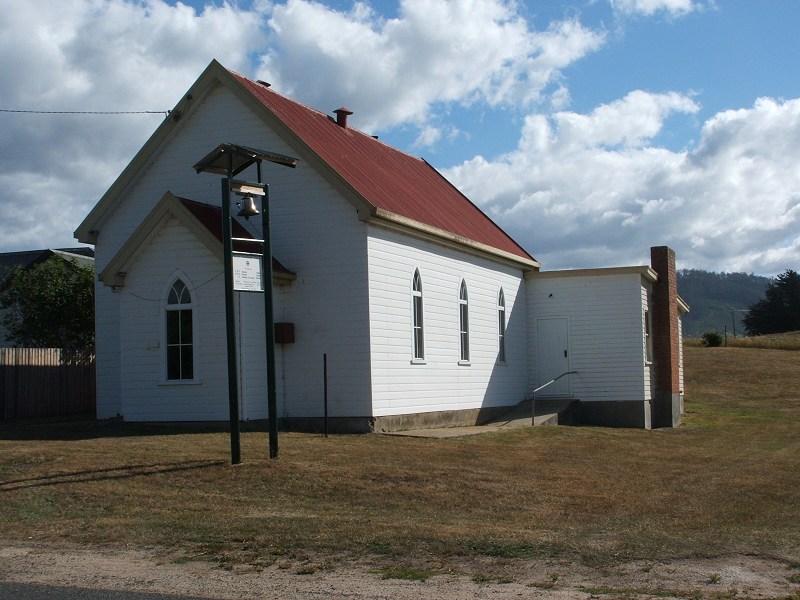
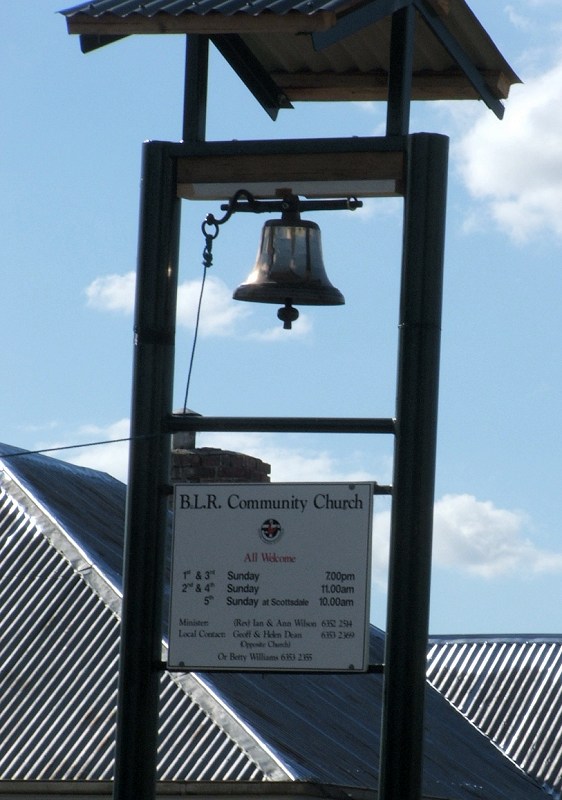
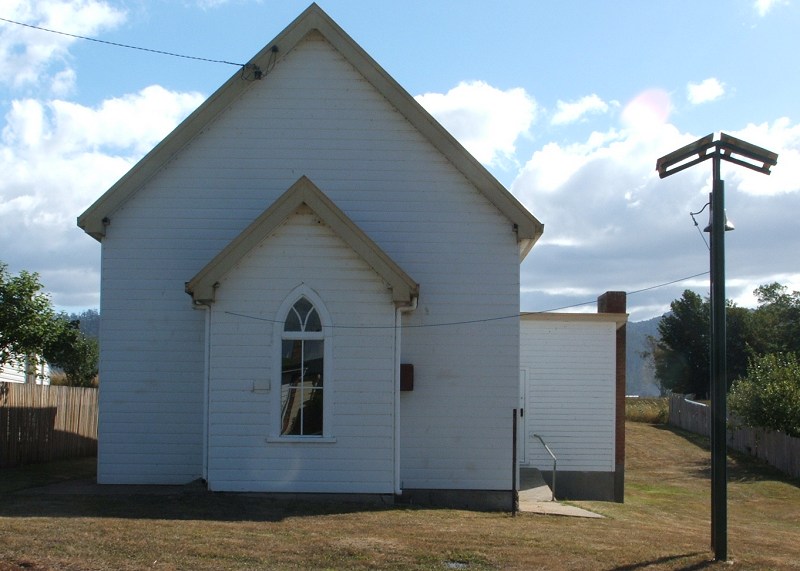
In 2005, this was the B.L.R Community Church, part of the Uniting Church. I am not sure what it was originally built as. There was a Presbyterian Church at Legerwood, but there are also references to a Methodist Chruch.
For sale in 2010 (interior photos).