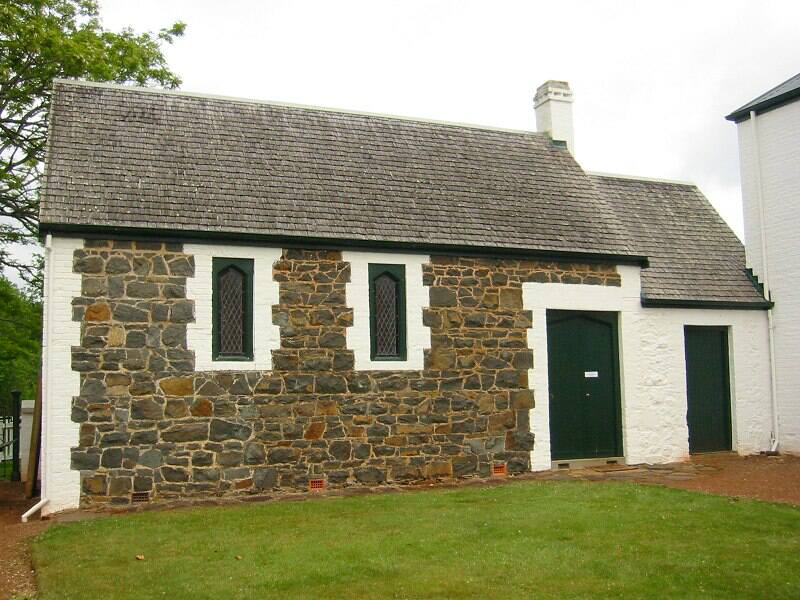
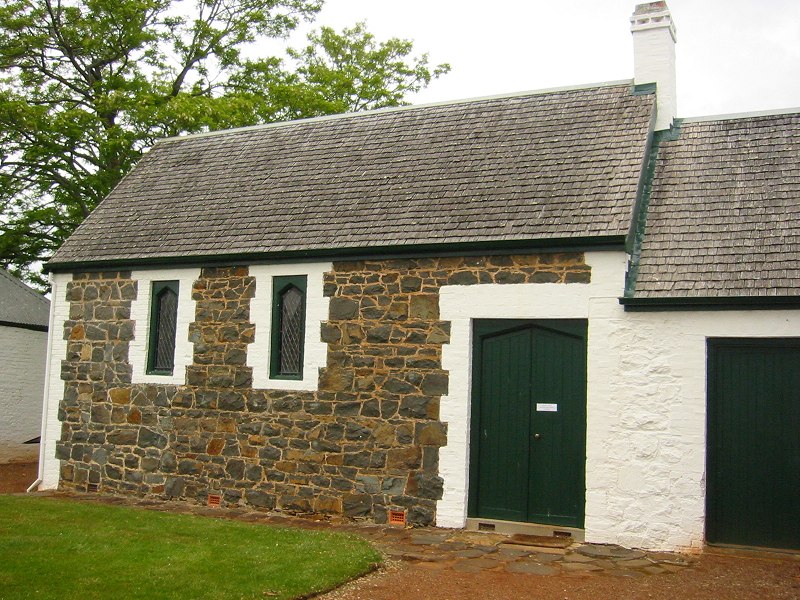
Opened c. 1836


432 Pages: A Catalogue of Things
Up Close & Inside

To go in, you have to go along this side bit and the door is around the back.


Originally here.
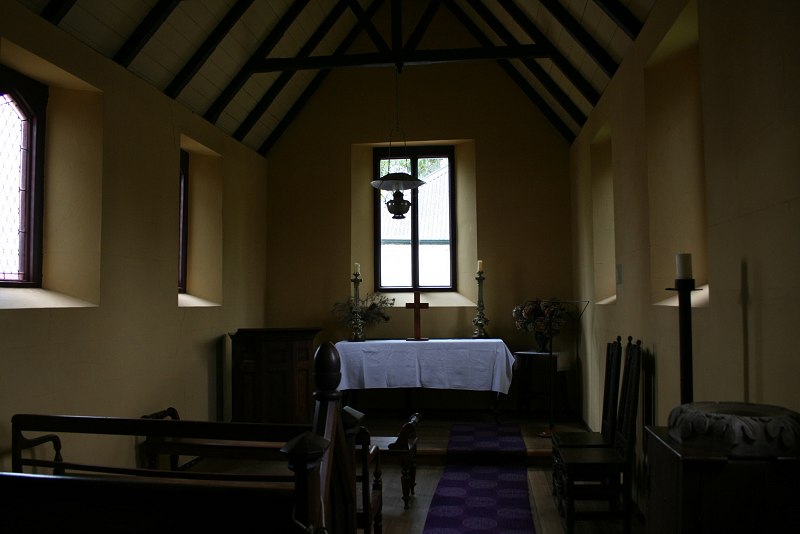
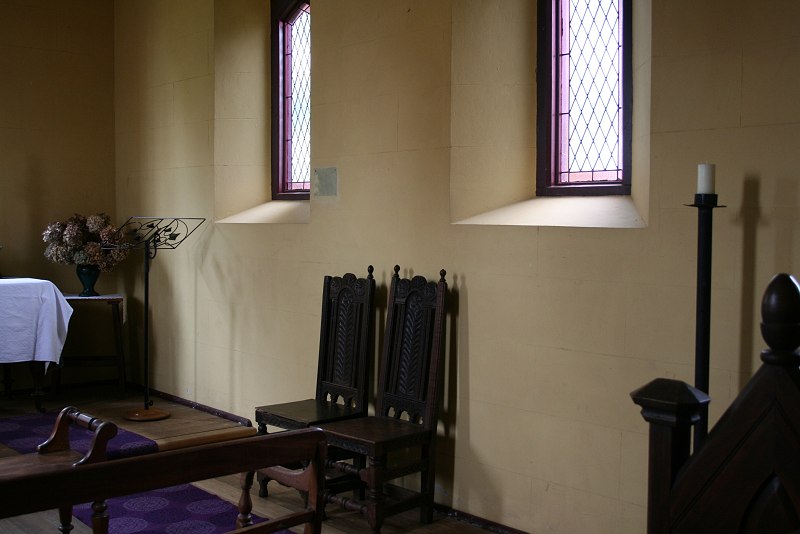
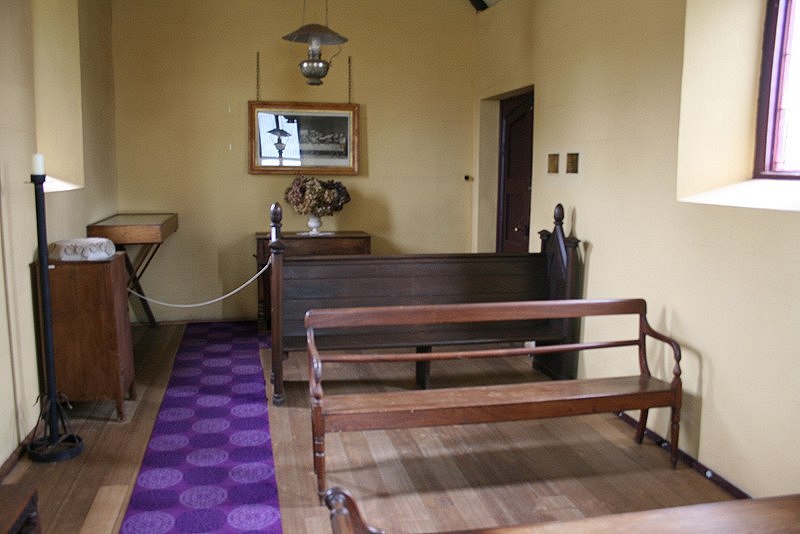
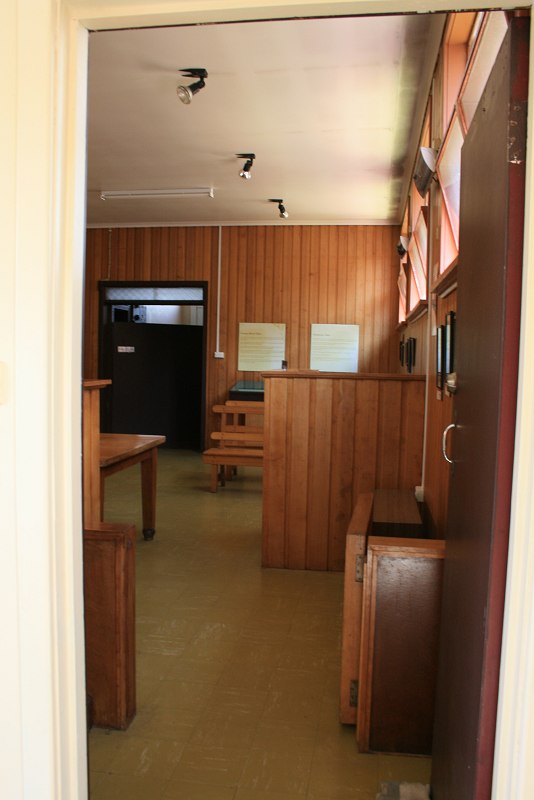
Internal photos are from the Rotary Club’s Doors Open Day in 2009.

St Matthews lays claim to being the oldest Anglican Church in Tasmania, bring opened in 1823. An article in the Mercury written for the St Matthew’s centenary in 1925 talks about the history of the church:
Mr. Knopwood retired in 1823 from the chaplaincy of Hobart, and come to live in
New Norfolk, and in the same year the inhabitants of New Norfolk applied to
the Governor-in-Chief at Sydney that he might be appointed chaplain of New Nor-
folk, stating that there was a brick school which could be used as a temporary
church.
The arrival of the official minister, Rev Hugh Robinson two years later, and his first service, is the date used for the centenary:
The beautiful church of St. Matthew’s as it now is, its gabled roof, stained glass windows, and noble chancel, is a very different building from what it was when the church was first erected. All that is left of the original building are the walls and flagged floor of the nave, and possibly the western walls of what are now the transepts. And even as to these there is a certain amount of doubt. The foundation stone of the chancel has on it the words, “Erected in 1825, Chancel added in 1894.” But there was a schoolhouse which, begun in 1823, was finished in 1824. Whether this was the present nave or part of it is uncertain, though there is little doubt that a portion of the present church was originally built for a school. It was not used definitely as a church till Mr. Robinson’s time, for, it was in the month that he arrived there, August, 1825, that tenders were submitted for church furniture, and a pulpit, reading desk and communion table put in the building. The carpentry work in the building was of a poor quality; for on Sunday, December 4, 1825, a portion of the ceiling fell in.
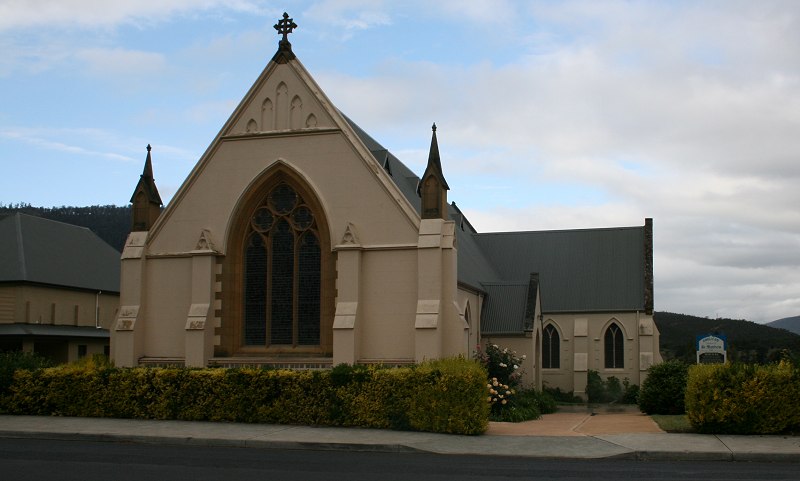
Since that time, the building has been extensively modified and its appearance has dramatically changed. A postcard from the State Library of Victoria with an illustration c.1825 and an engraving from LINC Tasmania, published in 1834 both show a church building very different to that in the above photo.


Two posts, from two visits with different content.
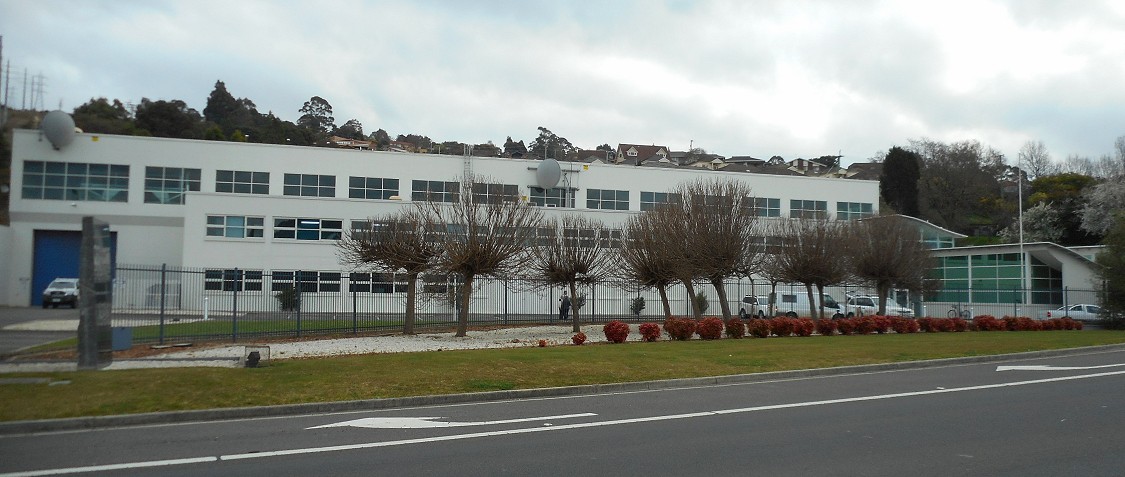
Trevallyn Power Station was built 1955, and replaced Duck Reach. It’s managed by Hydro Tasmania. A few years back, the state-owned HEC was broken up into 3 companies: the Hydro, who generate the power; Transend, who transmit it, and Aurora, who deal with the consumer side.

First, the 1950s style control room. Mostly replaced now by a couple of PCs.
The next stop is right down on the turbine floor
Two posts, from two visits with different content.
Trevallyn Power Station was built 1955, and replaced Duck Reach. It’s managed by Hydro Tasmania. A few years back, the state-owned HEC was broken up into 3 companies: the Hydro, who generate the power; Transend, who transmit it, and Aurora, who deal with the consumer side.


A large theatre in a (now) small mining town. Built 1898. A small historical display within the building provides the following information:
Edward Mulchay M.H.A built a timber hotel called the Royal Exchange on the site of an abandoned silver/lead mine in 1882. It was totally destroyed by fire two years later but within five years he had assembled his own and other capital to enter into a new enterprise, the Gaiety Theatre and Grand hotel. The destruction of the Royal Exchange and his personal loss of 5,000 pounds were strong in his mind so the new building was to be built of bricks, the first of which were being made at that time in Zeehan by John Connor.
Numbers indicate (approximately) the view of the corresponding photo.

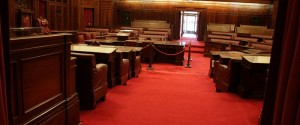
Main post: Old Parliament House, Canberra
The next five photos are going around the chamber in a clockwise direction.
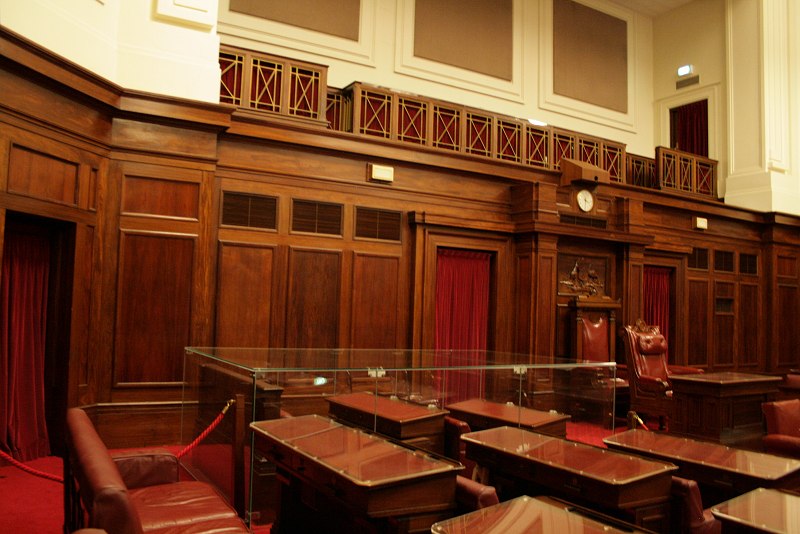
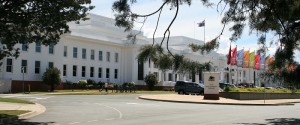
The original parliament house in Canberra was built in the 1920s (opened 1927) and was intended to be a temporary place for parliament to meet. Its replacement was completed in 1988, and is on the hill above. This older building now houses the Museum of Australian Democracy.
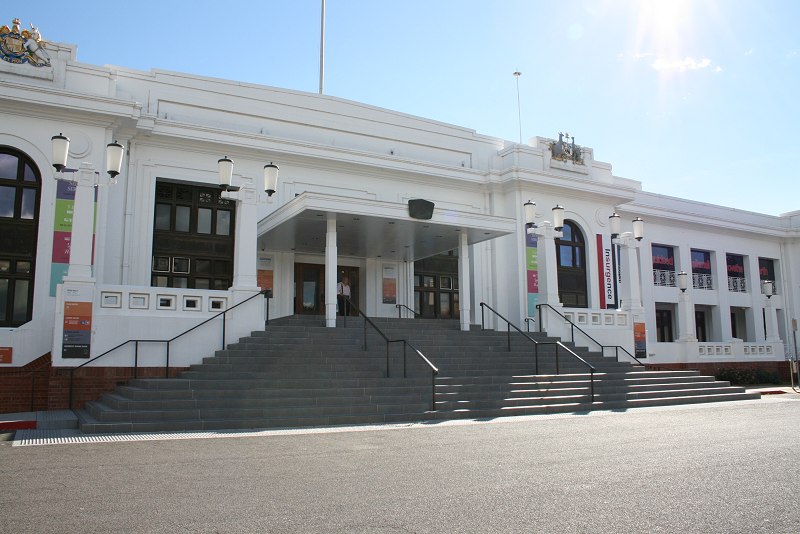
Main entrance.

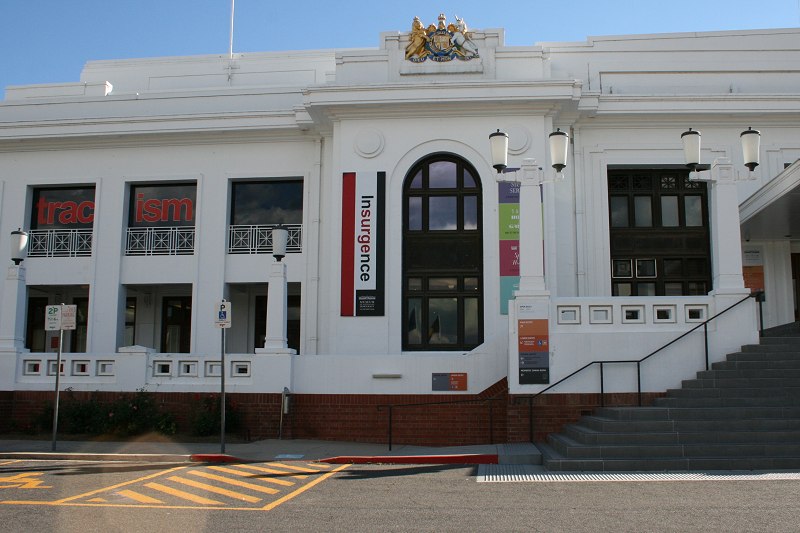

Side entrance (along front facade).
There are a number of different posts from this site, so I thought I should do a quick overview of the house to give the context to avoid having to repeat it each time. Other posts from this site can be found under the tag.
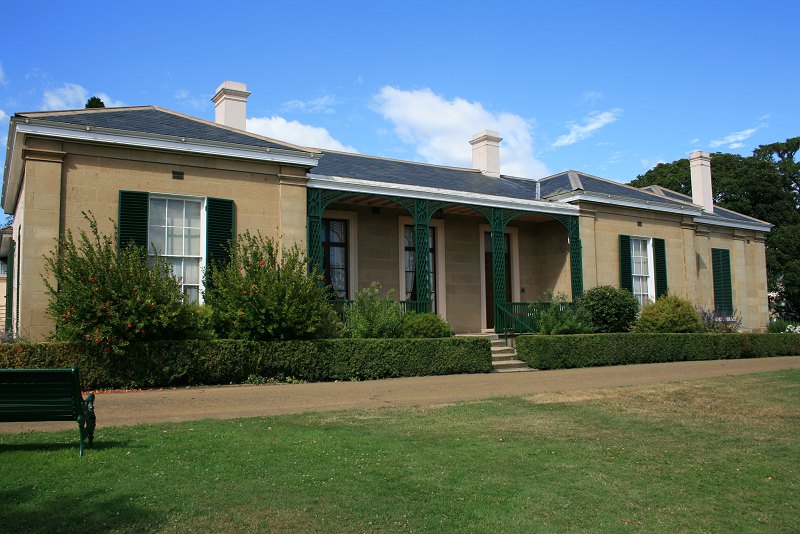
Runnymede is in National Trust property, in New Town, a suburb of Hobart. It was built in the 1830s and has been added to over the years. That room on the right is one such addition.
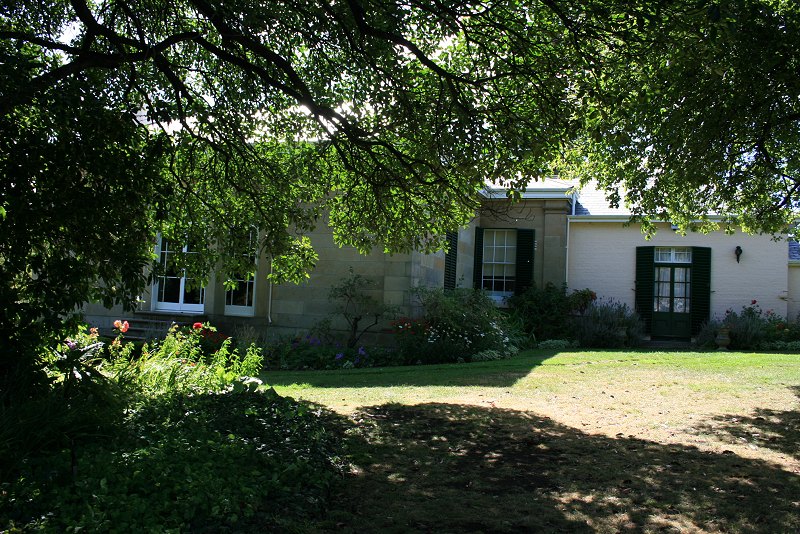
If I remember correctly, it is the ballroom, and has a side entrance via a bay window (partly hidden here by the tree).
Built 1864. Extended 1906.


Foyer on ground floor. Service area (where the public makes payments, gets information etc) is through that doorway.